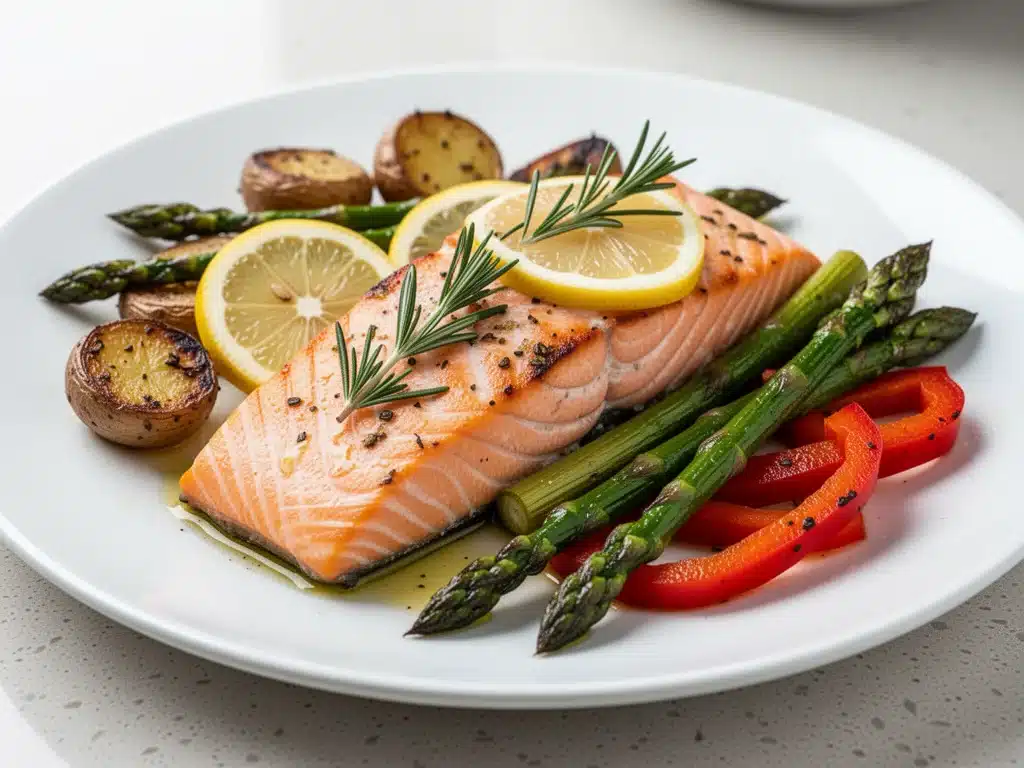
Last Tuesday, I was standing in my kitchen at 6:45 PM, staring at a half-empty fridge with that specific panic only a working parent knows. I had zero energy for chopping, zero patience for scrubbing pots, and definitely zero desire to order overpriced takeout that would arrive cold and soggy. My solution? I dumped everything into a single sheet pan. Salmon, asparagus, cherry tomatoes, lemon, garlic, olive oil. I slid it into the oven, went to change clothes, and ten minutes later, my house smelled like a high-end seafood restaurant.
I pulled it out, squeezed fresh lemon over the flaky fish, and took one bite. It was bright, buttery, and perfectly cooked. And the best part? There was exactly one pan to wash. This one-pan lemon garlic salmon dinner has since become my emergency reset button. It’s not just about convenience, though that’s huge. It’s about the fact that this meal actually tastes better than the heavy, greasy alternatives I usually resort to when I’m tired. It feels indulgent, but it’s light enough that I don’t feel sluggish afterward.
I’ve made this recipe at least twenty times in the last six months. I’ve tweaked it with different vegetables, different cuts of salmon, and even tried it with white fish when salmon was too pricey at the store. Every single time, it hits the mark. It’s the perfect balance of healthy eating and comfort food. If you’re looking for a way to eat well without spending your entire evening in the kitchen, this is it. It’s faster than delivery, healthier than drive-thru, and honestly? It’s just better.
Why You’ll Love This One-Pan Lemon Garlic Salmon Dinner
There are a few reasons I keep coming back to this recipe, but they all boil down to this: it respects your time and your taste buds. Here’s the real deal on why this one-pan lemon garlic salmon dinner is worth your oven space:
- Stupid Simple Cleanup — Seriously, one pan. One. I’m not exaggerating. No boiling water for rice, no separate skillet for veggies, no bowls for marinades. You dump, you bake, you scrape. If you can handle a baking sheet, you can make this.
- Lightning Fast — From fridge to table in about 25 minutes. That’s less time than it takes for a delivery app to find a driver. I make this on nights when I walk in the door exhausted and need food immediately.
- Restaurant-Quality Flavor — The combination of roasting salmon with garlic and lemon creates a caramelized, bright flavor profile that’s hard to beat. The vegetables soak up all the salmon juices, making them taste better than if they were roasted alone.
- Healthy Without Being “Diet Food” — It’s packed with omega-3s, protein, and fiber, but it doesn’t taste like cardboard. The healthy fats from the salmon and olive oil keep you full and satisfied.
- Flexible and Forgiving — Don’t like asparagus? Use broccoli. Hate tomatoes? Skip them. Wrong cut of salmon? It still works. This recipe bends to what you have in your fridge.
This is my go-to when I want to impress a date or just treat myself to something nice without the stress. It feels fancy, but it’s built for real life.
Ingredients You’ll Need
Here’s the best part: you probably have most of this already. This one-pan lemon garlic salmon dinner relies on fresh, simple ingredients that let the natural flavors shine. I’m particular about three things here: the quality of the salmon, the freshness of the garlic, and the acidity of the lemon. Don’t cut corners on those.
For the Salmon:
Salmon fillets (4 pieces, about 6 oz each / 170g each) — Look for wild-caught if your budget allows; it has a firmer texture and richer flavor. Atlantic farmed works fine too, just make sure it’s fresh and smells clean, not fishy. Pat them dry! Moisture is the enemy of good roasting.
Extra virgin olive oil (3 tablespoons / 45ml) — Use good quality here. This is the primary fat, so it needs to taste good. I keep a bottle of decent EVOO specifically for finishing dishes like this.
Fresh garlic (4 cloves, minced / about 2 tablespoons) — Yes, fresh. Jarred garlic has a metallic aftertaste that clashes with the delicate salmon. Minced fine so it distributes evenly. Don’t skimp; garlic is the star here.
Lemon (2 medium / about 120g juice) — One for juicing, one for slicing. Fresh lemon juice is non-negotiable. Bottled juice tastes flat and bitter. Squeeze it yourself.
Dijon mustard (1 teaspoon / 5g) — Sounds weird, but it adds depth and helps the seasoning stick. You won’t taste the mustard, just the richness.
Dried dill (1 teaspoon / 1g) — Or 1 tablespoon fresh dill. Dill and salmon are a classic pair for a reason. If you hate dill, use tarragon or just extra lemon zest.
Salt and black pepper — Kosher salt is best. Coarse black pepper adds a nice bite.
For the Vegetables:
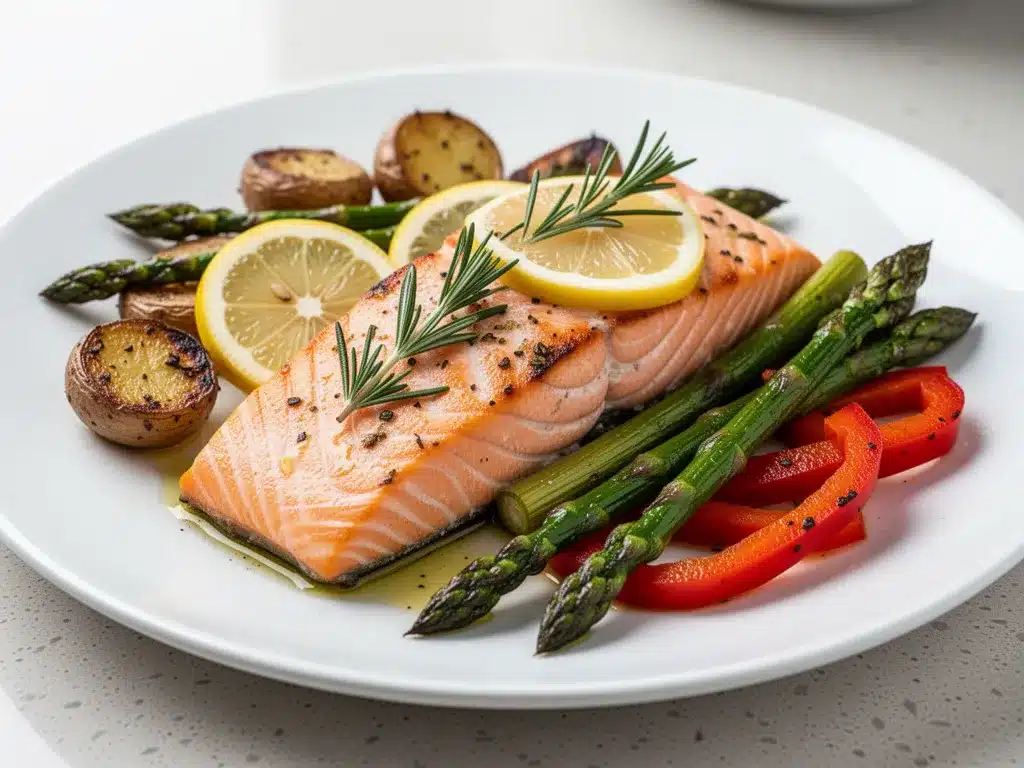
Asparagus (1 bunch / about 250g) — The classic pairing. Snap off the woody ends. Thick spears hold up better to roasting than thin ones.
Cherry tomatoes (1 cup / 150g) — They burst in the oven, creating little pockets of sweet, acidic sauce. Grape tomatoes work too, but cherry are juicier.
Red onion (1 medium, sliced into wedges / about 150g) — Adds sweetness and color. Yellow onion works, but red looks prettier and has a milder flavor when roasted.
Optional Add-ins:
Zucchini (1 medium, chopped) — Adds bulk and volume.
Potatoes (1 cup, diced small) — If you want a starch. Cut them small so they cook in the same time as the salmon.
Equipment Needed
You don’t need fancy equipment for this. Here’s what I actually use:
Large sheet pan (half-sheet pan) — 18×13 inches. This is crucial. If your pan is too small, the salmon and veggies will steam instead of roast. You need space between the items. I use a non-stick half-sheet pan because cleanup is easier, but a rimmed baking sheet works fine. Line it with parchment paper if you want zero cleanup, though I usually just grease it.
Small bowl — For whisking the marinade. Any small bowl will do.
Pastry brush or spoon — To spread the marinade over the salmon.
Sharp knife — For prepping the veggies. A dull knife makes chopping onions a struggle.
Cutting board — Any size. I keep one specifically for veggies to avoid cross-contamination.
Zester or microplane — For getting that lemon zest. It adds so much aroma compared to just juice.
How to Make It: Step-by-Step
Alright, let’s make this! I’m walking you through exactly how I do it, including the little tricks I’ve picked up to ensure your salmon is perfectly moist and your veggies are caramelized.
Step 1: Prep the Oven and Pan (2 minutes)
Preheat your oven to 400°F (200°C). This needs to be hot enough to roast the veggies quickly and cook the salmon without drying it out. Line your large sheet pan with parchment paper or lightly grease it with olive oil. I prefer parchment for the cleanup, but direct contact gives a slightly crispier skin if you’re into that.
Step 2: Prep the Vegetables (5 minutes)
Wash and chop your vegetables. For the asparagus, snap off the tough woody ends. You can usually do this by bending the spear; it will break naturally where the tender part begins. Slice the red onion into wedges, keeping the layers somewhat intact. Halve the cherry tomatoes. Toss them all on the prepared sheet pan in a single layer. Drizzle with 1 tablespoon of olive oil, sprinkle with a pinch of salt and pepper, and toss to coat. Spread them out—don’t crowd them, or they’ll steam.
Step 3: Make the Marinade (2 minutes)
In a small bowl, whisk together the remaining 2 tablespoons of olive oil, the minced garlic, the juice of one lemon, the Dijon mustard, dried dill, salt, and pepper. Zest the second lemon directly into the bowl if you’re using a microplane. This mixture is your flavor bomb. Whisk it until it’s emulsified and looks creamy.
Step 4: Season the Salmon (2 minutes)
Pat the salmon fillets dry with paper towels. This step is important for getting a nice texture. Place the fillets on the sheet pan, nestled in among the vegetables. If the pan is tight, you might need to move the veggies aside slightly. Brush the marinade generously over the top of each fillet. Save any extra marinade in the bowl to drizzle over the veggies later. Season the top of the salmon with a little extra salt and pepper.
Step 5: Roast (12-15 minutes)
Slide the pan into the preheated oven. Bake for 12-15 minutes. The exact time depends on the thickness of your salmon. A good rule of thumb: check it at 12 minutes. The salmon is done when it flakes easily with a fork and is opaque throughout. The edges of the asparagus should be slightly charred and crispy. The tomatoes should be burst and soft. If the salmon isn’t quite done but the veggies are, you can remove the veggies with a spatula and leave the salmon in for 2-3 more minutes.
Step 6: Finish and Serve (1 minute)
Remove the pan from the oven. Drizzle any remaining marinade from the small bowl over the hot salmon and veggies. Squeeze the juice of the second lemon (if you saved it) over everything for a final bright hit. Garnish with fresh parsley or extra dill if you have it. Serve immediately while hot.
Expert Tips & Tricks
Here’s everything I’ve learned from making this dozens of times. These tips will save you from my mistakes.
Don’t Overcrowd the Pan
This is the #1 mistake people make. If your salmon and veggies are touching, they will steam. You want them to roast. Use a large enough pan. If you’re cooking for four people, use a full half-sheet pan. If you’re using a smaller 9×13 pan, you might need to cook in two batches or use a different vegetable arrangement. Space is key.
Pat the Salmon Dry
Wet salmon steams. Dry salmon roasts. I know it seems like a minor step, but patting the fillets dry with paper towels before seasoning makes a huge difference in texture. It helps the marinade stick and prevents the fish from becoming mushy.
Use Fresh Garlic
I cannot stress this enough. Jarred minced garlic is often packed in water or oil and has a fermented flavor. Freshly minced garlic adds a sharp, clean bite that cuts through the richness of the salmon. It’s worth the 30 seconds it takes to peel and chop.
Check for Doneness Early
S salmon cooks quickly and dries out fast. If you leave it in for 20 minutes, it will be rubbery. Check it at 12 minutes. If it flakes easily and is just opaque in the center, pull it. It will continue to cook slightly from residual heat.
Save the Lemon Zest
Most recipes just call for juice, but the zest contains the essential oils that give lemon its aroma. Zesting one lemon into the marinade adds a depth of flavor that juice alone can’t achieve. It’s the secret to that “restaurant” taste.
Variations & Substitutions
Once you’ve nailed the basic version, here’s how you can mix it up. I’ve tried all of these.
Vegetable Swaps
Broccoli and Cauliflower — Chop into florets. They take slightly longer to cook, so cut them small or roast them for 5 minutes before adding the salmon.
Green Beans — Trim ends and toss on the pan. They get crispy and delicious.
Bell Peppers — Sliced into strips. Add sweetness and color.
Broccolini — A milder, sweeter alternative to asparagus. Works perfectly.
Flavor Profiles
Asian-Inspired — Swap the Dijon and dill for soy sauce, ginger, and sesame oil. Garnish with sesame seeds and green onions.
Mediterranean — Add olives and capers to the veggies. Use oregano instead of dill.
Herbaceous — Use fresh parsley, thyme, and rosemary in the marinade. Very fragrant.
Protein Swaps
White Fish — Cod, halibut, or tilapia work great. They cook faster, so check at 10 minutes.
Shrimp — Toss shrimp on the pan with the veggies. Cook for 8-10 minutes.
Chicken Breast — Use thin-cut breasts or cutlets. They take longer, so roast veggies first for 10 minutes, then add chicken for 15-18 minutes.
Dietary Modifications
Gluten-Free — This recipe is naturally gluten-free. Just check your Dijon mustard label (most are GF).
Dairy-Free — Naturally dairy-free.
Keto/Low-Carb — Skip the potatoes and onions. Load up on asparagus, zucchini, and broccoli.
Whole30 — Ensure your Dijon and olive oil are compliant. Skip the sugar in any marinade additions.
Serving & Storage
How to Serve
I usually serve this straight from the sheet pan at the dinner table—it looks rustic and stays warm. But here are other ways I’ve enjoyed it:
Sides:
Rice or Quinoa — If you want a starch to soak up the juices.
Couscous — Quick and fluffy.
Sourdough Bread — For dipping into the lemony pan juices.
Simple Green Salad — A light arugula salad with lemon vinaigrette complements the richness.
Toppings Bar:
When I have guests, I put out: extra lemon wedges, flaky sea salt, red pepper flakes, fresh herbs, and grated Parmesan (if you’re not keeping it dairy-free).
Storage Instructions
Refrigerator:
Store leftovers in an airtight container for up to 3 days. The salmon will keep well, and the veggies actually taste better the next day as they soak up the flavors.
Reheating:
Best method: Reheat in a 350°F oven for 10-15 minutes to keep the veggies crisp.
Microwave: Heat in 30-second intervals. Note: The salmon may become slightly drier when microwaved, so add a squeeze of fresh lemon juice to refresh it.
Freezing:
Honestly, this doesn’t freeze well. The texture of the salmon changes, and the veggies get mushy. It’s best made fresh. If you have leftovers, eat them within 3 days.
Nutrition Information
I’m not a nutritionist, but here’s the breakdown if you’re tracking. This is per serving (based on 4 servings, with veggies and one fillet):
- Calories: 380
- Protein: 34g
- Carbs: 12g
- Fiber: 4g
- Sugar: 5g
- Fat: 22g
- Saturated Fat: 4g
- Cholesterol: 85mg
- Sodium: 320mg
What’s Good: High in protein and omega-3s. Good fiber from veggies. Low in refined carbs.
What to Know: Higher in healthy fats. Sodium can be adjusted by reducing added salt.
My Take: This is nutrient-dense, satisfying food. It’s not a “diet” recipe, but it’s clean eating at its best. When I want to make it lighter, I reduce the olive oil slightly and add more bulk veggies like zucchini.
Final Thoughts
So that’s my go-to one-pan lemon garlic salmon dinner! I’ve probably talked your ear off at this point, but when you make a recipe this often, you have a lot to say about it. This has saved weeknight dinners more times than I can count. It’s my answer to “what’s for dinner” when I’m tired, don’t want takeout, and still want something that tastes really good. My family is happy, I’m happy because I’m not stressed about cooking, and I’m happy because I’m not washing a mountain of dishes.
Make it yours! Try different add-ins, swap in your favorite vegetables, adjust the garlic (though more is always better in my opinion). The best recipes are the ones you adapt to your family’s tastes.
If you make this, drop a comment and let me know what you think! I love hearing how recipes turn out in your kitchen. And if something doesn’t work, tell me that too—I’m here to help troubleshoot. Happy cooking! And I hope your kitchen smells half as good as mine does right now.
Frequently Asked Questions
Can I use frozen salmon?
You can, but you need to thaw it completely first. Pat it very dry. Frozen salmon releases more water, so it’s harder to get a good roast. If you’re in a rush, fresh is always better. If you must use frozen, thaw it in the fridge overnight and press it with paper towels to remove excess moisture.
Why did my salmon turn out dry?
It was probably overcooked. Salmon continues to cook after you take it out of the oven. Pull it when it’s just opaque in the center and slightly translucent in the very middle. It will finish cooking on the plate. Also, thinner fillets cook faster, so check them at 10 minutes.
Can I make this ahead for a dinner party?
Sort of. You can prep the veggies and the marinade up to 4 hours ahead and store them in the fridge. Keep them separate. When you’re ready to cook, assemble the pan and bake. This saves you stress during the party. Don’t bake it ahead and reheat; the texture suffers.
What side dishes go with this?
Since the veggies are on the pan, you might want a starch. Rice, quinoa, or crusty bread are perfect. A light salad with a lemon vinaigrette also works well to balance the richness. Avoid heavy sides like mashed potatoes unless you’re really hungry!
Can I use other fish?
Absolutely. Cod, halibut, trout, and tilapia all work well. Just adjust cooking time based on thickness. White fish cooks faster than salmon, so check it early. Shrimp is another great option—just reduce cook time to 8-10 minutes.
How do I know when the asparagus is done?
It should be tender-crisp. The tips should be slightly browned and the stalks should be easy to pierce with a fork but still have a little bite. If it’s mushy, you’ve gone too long. Asparagus cooks quickly, so keep an eye on it.
Can I double this recipe?
Yes, but you need a larger pan. Use two half-sheet pans or a very large roasting pan. Don’t overcrowd the pan, or the food will steam. You may need to rotate the pans in the oven halfway through for even cooking. Cooking time remains the same.
Pin This Recipe!
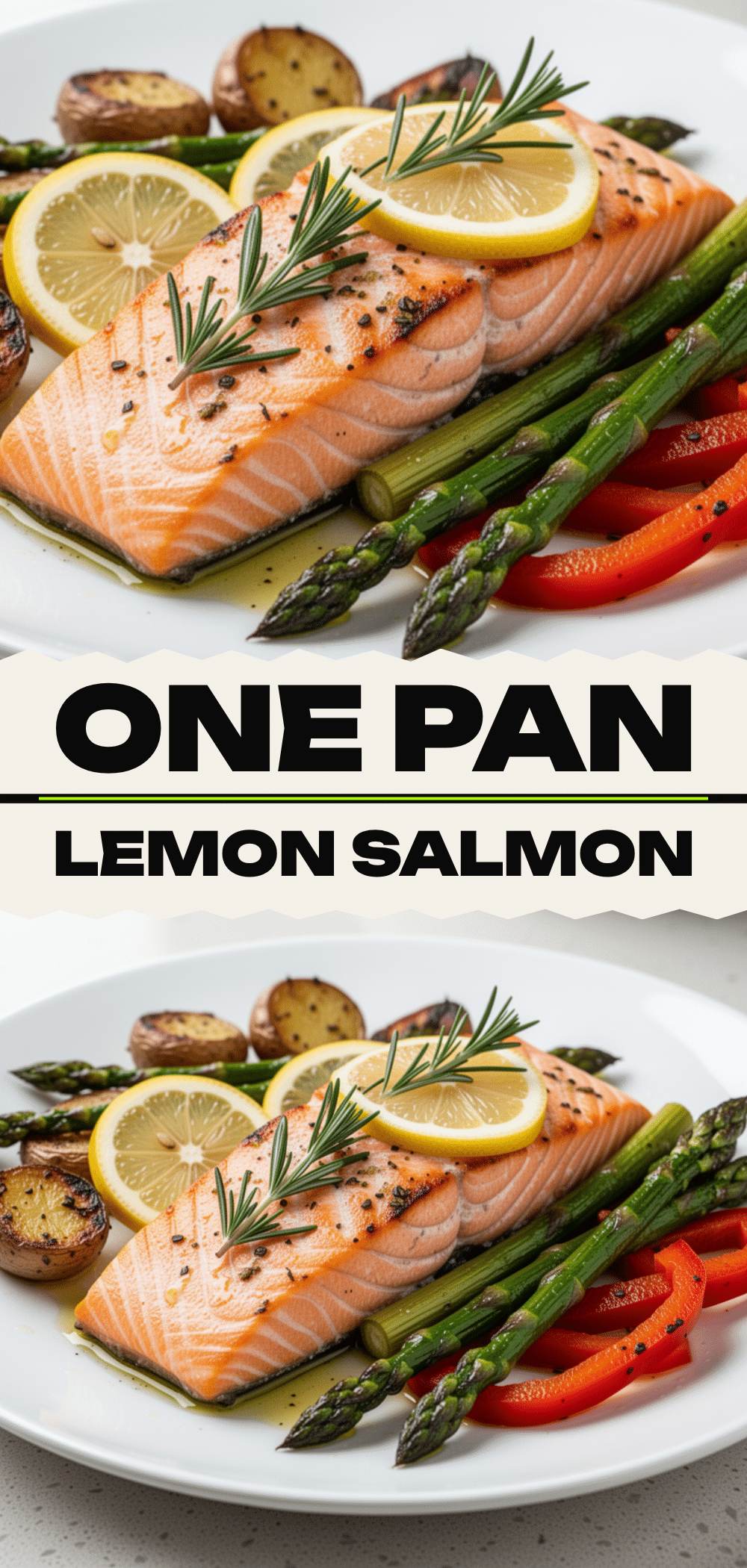
One-Pan Lemon Garlic Salmon Dinner
- Total Time: 25 minutes
- Yield: 4 servings 1x
Description
A quick, healthy, and flavorful weeknight meal featuring salmon and vegetables roasted on a single sheet pan with a bright lemon-garlic marinade.
Ingredients
- 4 salmon fillets (about 6 oz each)
- 3 tablespoons extra virgin olive oil
- 4 cloves fresh garlic, minced
- 2 medium lemons (1 for juicing, 1 for slicing/zesting)
- 1 teaspoon Dijon mustard
- 1 teaspoon dried dill (or 1 tablespoon fresh dill)
- Salt and black pepper to taste
- 1 bunch asparagus (woody ends snapped off)
- 1 cup cherry tomatoes
- 1 medium red onion, sliced into wedges
- Optional: 1 medium zucchini, chopped; 1 cup diced potatoes
Instructions
- Preheat oven to 400°F (200°C). Line a large half-sheet pan (18×13 inches) with parchment paper or grease lightly with olive oil.
- Prep vegetables: Snap off woody ends of asparagus, slice red onion into wedges, and halve cherry tomatoes. Toss with 1 tablespoon olive oil, salt, and pepper. Spread in a single layer on the prepared pan.
- Make marinade: In a small bowl, whisk together remaining 2 tablespoons olive oil, minced garlic, juice of one lemon, Dijon mustard, dried dill, salt, pepper, and zest of the second lemon.
- Pat salmon fillets dry with paper towels. Place on the sheet pan among the vegetables. Brush marinade generously over the salmon. Season with extra salt and pepper.
- Roast for 12-15 minutes, or until salmon flakes easily with a fork and is opaque throughout. Vegetables should be tender and slightly charred.
- Remove from oven. Drizzle with any remaining marinade and squeeze juice from the second lemon over everything. Garnish with fresh herbs if desired and serve immediately.
Notes
Do not overcrowd the pan to ensure roasting instead of steaming. Pat salmon dry before seasoning for better texture. Use fresh garlic for best flavor. Salmon continues to cook after removal from oven, so check for doneness early.
- Prep Time: 10 minutes
- Cook Time: 15 minutes
- Category: Main Course
- Cuisine: American
Nutrition
- Serving Size: 1 salmon fillet and
- Calories: 380
- Sugar: 5
- Sodium: 320
- Fat: 22
- Saturated Fat: 4
- Carbohydrates: 12
- Fiber: 4
- Protein: 34
Keywords: salmon, one-pan dinner, healthy dinner, quick meals, lemon garlic, sheet pan dinner, weeknight dinner, gluten-free, dairy-free