It was 6:45 PM on a Tuesday, and I was staring into the open fridge like it owed me money. The light flickered, illuminating a sad container of leftover rice, half a lemon that had been there since Sunday, and a package of salmon that had been in the freezer since my last successful meal prep attempt. I was tired. Not “need a nap” tired, but “I have two more emails to send and I don’t want to stand at a stove” tired. My instinct? Order takeout. Open the app. Scroll past the pizza places. Maybe get those dumplings from the Chinese place down the street.
But then I saw it. That lemon. And the salmon. And I remembered a recipe my sister shared with me three years ago—a baked salmon with a bright, zesty lemon dill sauce that changed how I thought about weeknight dinners. It’s not just “healthy.” It’s not just “quick.” It’s the kind of meal that makes you feel like you actually cared about your dinner, even though it took less time than it takes to wait for a delivery driver to find your apartment.
So I closed the app. I preheated the oven. And I threw together what I thought would be a mediocre fish dinner. Thirty minutes later, the kitchen smelled like a fancy bistro, and I was sitting at the table with a glass of white wine, feeling surprisingly proud of myself. That night, I discovered that sometimes the best meals happen when you stop overthinking and just trust the process. This healthy baked salmon with lemon dill sauce has since become my go-to for busy weeknights. It takes 15 minutes of active time, uses ingredients I always have on hand, and tastes like something from a restaurant I can’t afford.
I’ve made this healthy baked salmon with lemon dill sauce at least a dozen times since that Tuesday. I’ve tweaked the garlic amount (I always go heavy on the garlic now), adjusted the dill (fresh is non-negotiable for me), and even tried it with different fish. But the core method? It’s perfect. And if you’re looking for a way to eat well without spending hours in the kitchen, this is your new best friend.
Why You’ll Love This Healthy Baked Salmon with Lemon Dill Sauce
There are about ten reasons I keep making this healthy baked salmon with lemon dill sauce, but let’s be real—you don’t need ten reasons. You need three good ones. Here’s why this recipe has completely changed our weeknight dinner routine.
Lightning Fast — Seriously, if you can set an oven to 400°F and mix a bowl, you can make this. I’ve walked my teenage son through it over FaceTime while he was at college, and he nailed it. From start to finish, it’s about 25 minutes. But active cooking time? Maybe 10 minutes. I make this on weeknights when I get home at 7pm and still want to eat something that doesn’t come in a box.
Healthy Without Being Sad — This isn’t one of those “diet” meals where you eat boiled chicken and feel resentful. This is rich, creamy, tangy, and flavorful. The lemon dill sauce is luscious, not watery. The salmon stays moist, not dry. You’re getting omega-3s, high-quality protein, and healthy fats. It feels indulgent, but it’s actually good for you. My husband says it’s “guilt-free comfort food,” which is high praise from a guy who thinks vegetables are a threat.
Pantry-Friendly — You probably have 80% of these ingredients already. I keep frozen salmon fillets in the freezer and fresh dill in the fridge specifically so I can make this on a whim. The sauce uses pantry staples like mayo, mustard, and lemon juice. If you have those, you’re golden. No special trips to the store needed.
Crowd-Pleaser — I’ve served this to my vegetarian sister (who just eats the veggies and sauce), my gluten-free neighbor (it’s naturally gluten-free), and my dad who usually complains about “too much flavor.” Everyone loved it. Even the kids, who are notoriously skeptical of fish, asked for seconds. That’s a miracle.
Makes Amazing Leftovers — Actually tastes better the next day. The flavors meld together overnight. I deliberately make extra for lunch throughout the week. I’ll eat it cold with a side of greens, or reheat it gently in the microwave with a splash of water. It doesn’t get fishy or weird. It just gets better.
Budget-Smart — Salmon can be pricey, but buying frozen fillets or looking for sales brings the cost down significantly. Feeds 4 people for under $25. That’s less than one meal at a sit-down restaurant, and you get leftovers for two more days. It’s a win-win.
This is my go-to when I need dinner to just work. No complicated techniques, no weird ingredients, just reliable, delicious food that makes everyone happy. And it pairs beautifully with crispy garlic chicken if you’re feeding a mixed crowd who can’t agree on protein.
Ingredients You’ll Need
Here’s the best part: you probably have most of this already. The beauty of this healthy baked salmon with lemon dill sauce is how simple the ingredient list is. I’m particular about three things here, and I’ll tell you exactly why. But honestly, even if you substitute, it’ll still be good.
For the Salmon
Salmon fillets (1.5 lbs / 680g) — I use wild-caught Alaskan salmon when it’s on sale, but farmed Atlantic works fine too. Look for fillets that are about 1-inch thick. If they’re too thin, they’ll overcook. If they’re too thick, they’ll take longer. Uniform thickness is key. I buy them frozen and thaw them in the fridge overnight. It’s cheaper and less wasteful.
Olive oil (2 tablespoons / 30ml) — Use extra virgin if you have it. It adds a nice fruity note. But if you’re watching calories, regular olive oil or even avocado oil works. I use extra virgin because I believe in treating myself, even on weeknights.
Garlic (3 cloves, minced / about 1 tablespoon) — Fresh only. No jarred garlic in this recipe. It has a metallic taste that clashes with the delicate salmon. Mincing 3 cloves takes 30 seconds. Just do it.
Salt and black pepper — Kosher salt is best because it’s easier to control. Sea salt works too. Freshly cracked black pepper adds a nice bite. Don’t skimp on the salt; it brings out the flavor of the fish.
For the Lemon Dill Sauce
Greek yogurt (½ cup / 120g) — I use plain, non-fat or low-fat. It’s creamy but lighter than mayo. Some people use sour cream, but I prefer the tang of Greek yogurt. It’s healthier and tastes fresher. If you’re strict about dairy-free, see the variations below.
Mayonnaise (2 tablespoons / 30g) — Yes, mayo. Don’t skip it. It adds richness and helps the sauce cling to the salmon. I use light mayo to keep it “healthy,” but regular mayo tastes richer. Your call. I’m not a judge.
Lemon juice (2 tablespoons / 30ml) — Freshly squeezed is non-negotiable. Bottled lemon juice tastes flat and artificial. Squeeze half a lemon, then squeeze the other half if you need more. The acid is what makes the sauce bright. If you don’t have fresh lemons, this recipe won’t shine.
Lemon zest (1 teaspoon / from 1 lemon) — This is where the real lemon flavor lives. The zest has oils that juice doesn’t. Use a microplane or fine grater. Don’t grate the white pith—it’s bitter. Just the yellow part.
Fresh dill (2 tablespoons, chopped / about 10g) — Fresh dill is essential. Dried dill works in a pinch, but it’s much weaker. Use 1 teaspoon dried if you must. But fresh dill gives that grassy, aromatic flavor that defines this sauce. I grow dill on my windowsill in the summer. In winter, I buy it fresh from the store and freeze it in ice cube trays with a little water.
Dijon mustard (1 teaspoon) — Adds depth and a little tang. It balances the sweetness of the yogurt. If you don’t have Dijon, yellow mustard works, but it’s sweeter. I prefer Dijon for its sophisticated bite.
Honey (1 teaspoon) — Just a touch to balance the acidity. If you’re avoiding sugar, skip it. The lemon and yogurt are tart enough. But a little honey rounds out the flavors. I use raw honey when I have it.
Optional Add-ins — Cherry tomatoes (1 cup, halved) — I throw these on the baking sheet with the salmon. They get blistered and sweet. Asparagus (1 bunch, trimmed) — Roasts perfectly alongside the salmon. Broccoli florets (2 cups) — Adds crunch and color. I love a one-pan meal.
Equipment Needed
You don’t need fancy equipment for this. Here’s what I actually use.
Baking sheet — I use a standard 18×13 inch rimmed baking sheet. Line it with parchment paper for easy cleanup. Or use a silicone baking mat. I prefer parchment because it’s disposable and I don’t have to scrub.
Small mixing bowl — For the sauce. Any size works. I use a 1-cup bowl. If you don’t have one, use a small plate or even a measuring cup.
Whisk — For mixing the sauce. A small whisk works best. If you don’t have one, a fork works too. You’re just mixing, not whipping egg whites.
Microplane or grater — For the lemon zest. A regular box grater works, but it’s harder to get fine zest. I’m obsessed with my microplane from IKEA—it’s like $3 and makes life easier. If you don’t have one, just mince the lemon peel very finely with a knife.
Sharp knife — For chopping the dill and mincing the garlic. Dull knives make you cry more—learned this the hard way.
Cutting board — Any size works. I use plastic for easier cleanup. But wood is nicer to look at.
Measuring spoons — Pretty standard stuff. Dollar store versions work fine. But accurate measurements help with the sauce balance.
Parchment paper — Essential for easy cleanup. I buy it in rolls and cut it to size. It’s cheap and saves me from scrubbing baking sheets later.
How to Make It: Step-by-Step
Alright, let’s make this! I’m walking you through exactly how I do it, including the little tricks I’ve picked up over the years. This healthy baked salmon with lemon dill sauce is so simple that you’ll wonder why you ever stressed about dinner.
Step 1: Prep Your Oven and Pan (2 minutes)
Preheat your oven to 400°F (200°C). While it’s heating, line a large baking sheet with parchment paper. I like to leave a little space between each salmon fillet so they bake evenly. If you’re adding veggies like asparagus or broccoli, prep them now. Trim the asparagus, chop the broccoli. Set them aside. This healthy baked salmon with lemon dill sauce is all about efficiency.
Step 2: Make the Lemon Dill Sauce (3 minutes)
In a small bowl, combine the Greek yogurt, mayonnaise, lemon juice, lemon zest, chopped fresh dill, Dijon mustard, and honey. Whisk until smooth and creamy. Taste it. Does it need more lemon? More salt? Adjust to your liking. The sauce should be tangy, creamy, and herbaceous. If it’s too thick, add a splash of water. If it’s too thin, add a little more yogurt. Set it aside. It’ll thicken up a bit in the fridge.
Step 3: Prep the Salmon (2 minutes)
Pat the salmon fillets dry with paper towels. This is important! Moisture prevents browning and can make the fish steam instead of bake. Rub each fillet with olive oil, then season generously with salt and black pepper. Don’t be shy with the salt. The salmon needs flavor. Place them on the prepared baking sheet, skin-side down if they have skin.
Step 4: Add Veggies (Optional) (1 minute)
If you’re adding vegetables, arrange them around the salmon. Toss them with a little olive oil, salt, and pepper. Broccoli and asparagus work great. Cherry tomatoes can go on top of the salmon or around it. They’ll roast in the same time as the fish. This makes cleanup a breeze.
Step 5: Bake (12-15 minutes)
Place the baking sheet in the preheated oven. Bake for 12-15 minutes, depending on the thickness of your fillets. A good rule of thumb: cook for 4-5 minutes per inch of thickness. The salmon is done when it flakes easily with a fork and is opaque throughout. It should still be moist and slightly translucent in the very center if you like it rare, but fully cooked is safer for most people. Don’t overcook it! Dry salmon is sad salmon.
Step 6: Add the Sauce (2 minutes)
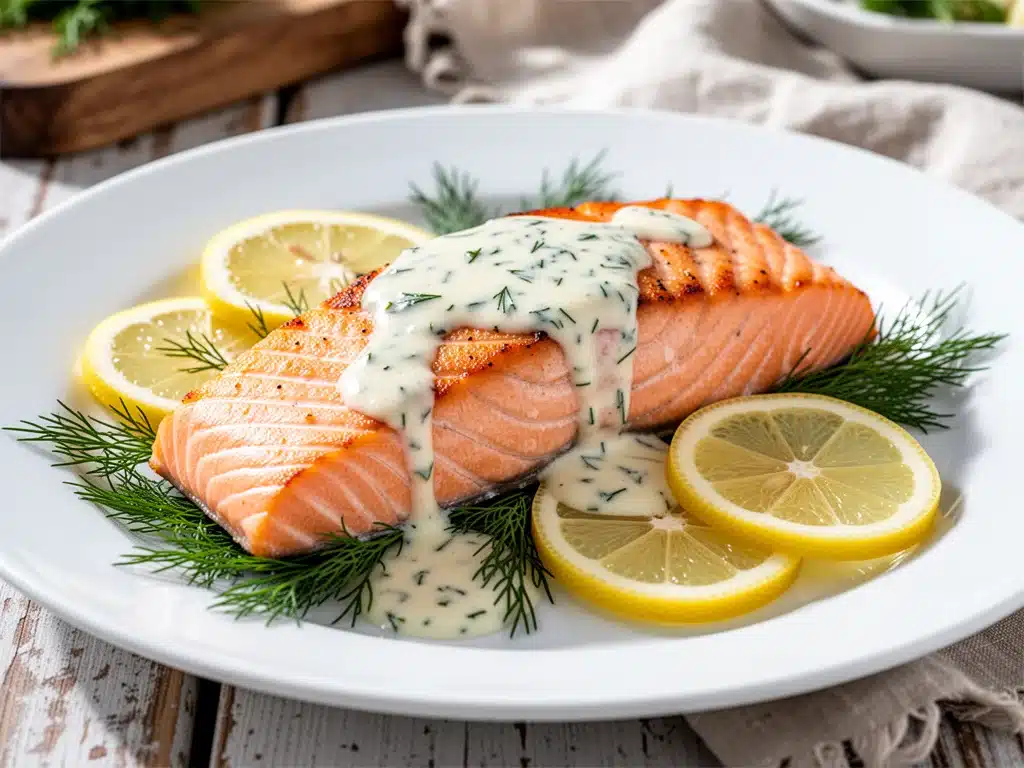
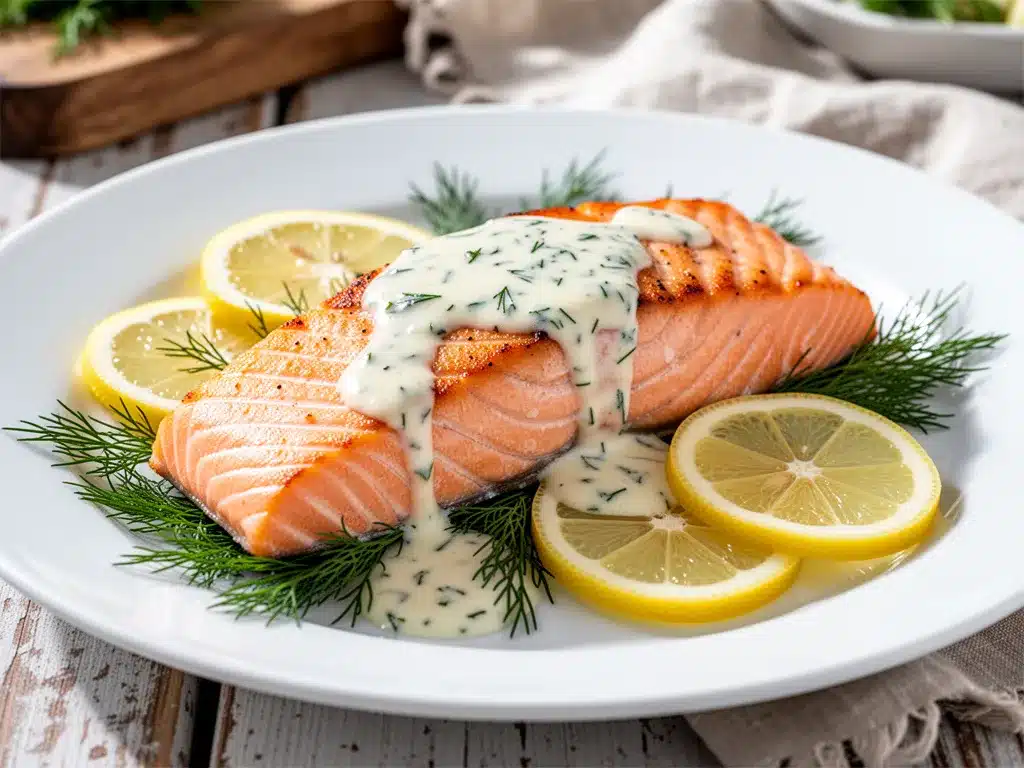
Remove the baking sheet from the oven. Spoon the lemon dill sauce generously over each fillet. The residual heat will warm the sauce without cooking it. If you’re adding veggies, give them a quick stir. The sauce will melt into the salmon, creating a creamy, tangy coating. It looks gorgeous. I always take a photo before I eat. (Don’t judge me.)
Step 7: Serve (1 minute)
Serve immediately. I usually serve this straight from the baking sheet at the dinner table—it looks rustic and stays warm. Garnish with extra fresh dill and a lemon wedge. Pair with quinoa, rice, or roasted potatoes. Or just eat it with a fork and savor every bite. This healthy baked salmon with lemon dill sauce is best enjoyed hot and fresh.
Total Time: About 25 minutes (10 minutes active, 15 minutes baking)
Expert Tips & Tricks
Here’s everything I’ve learned from making this dozens of times. These tips will save you from my mistakes.
Don’t Overcook the Salmon — This is the #1 mistake people make. Salmon continues to cook after you remove it from the oven. Take it out when it’s almost done, not when it’s perfectly done. It’ll carry over. Overcooked salmon is dry and tough. Undercooked salmon is safe if it’s 145°F internally, but most people prefer it moist. Use a thermometer if you’re unsure. 125-130°F for medium-rare, 140°F for medium.
Pat It Dry — I can’t stress this enough. Wet salmon steams. Dry salmon bakes. Use paper towels to remove as much moisture as possible. It sounds like a tiny step, but it makes a huge difference in texture.
Fresh Dill Only — Dried dill is a last resort. Fresh dill has a volatile oil that gives it that bright, grassy flavor. If you must use dried, use 1 teaspoon per 2 tablespoons fresh. But please, try to find fresh. It’s worth it.
Zest Before You Juice — Always zest your lemon before you juice it. It’s much easier to grate the yellow skin when the lemon is whole. Once you cut it, the skin dries out and becomes harder to zest. Save yourself the frustration.
Room Temperature Sauce — If your yogurt is cold, the sauce might separate slightly. Let it sit out for 10 minutes before mixing. Or just whisk it vigorously. It’ll come back together. Nothing is ruined.
Common Mistakes (and how to avoid them):
- Mistake: Sauce is too runny — Fix: Add more yogurt or let it sit for 5 minutes to thicken. Or add a teaspoon of cornstarch mixed with water.
- Mistake: Salmon is dry — Fix: You overcooked it. Next time, take it out 2 minutes earlier. Or check with a thermometer.
- Mistake: Sauce tastes bland — Fix: Add more lemon juice, salt, or dill. Taste as you go. The sauce should be bold.
Pro Tricks I’ve Learned:
- For Restaurant-Quality Finish — Broil for the last 1-2 minutes to get a slight golden top on the sauce. Watch it closely! It burns fast.
- For Extra Flavor — Add a pinch of red pepper flakes to the sauce for a little kick. It’s subtle but nice.
- For Better Texture — Let the salmon rest for 2 minutes after baking before saucing. It retains juiciness.
Variations & Substitutions
Once you’ve nailed the basic version, here’s how you can mix it up. I’ve tried all of these, and they all work.
Spicy Version — Add ½ teaspoon cayenne pepper or red pepper flakes to the sauce. Or swap the Dijon for whole-grain mustard for more bite. My friend loves it hot. I stick to mild, but I respect the heat.
Herb Swap — No dill? Use fresh parsley or cilantro. It changes the flavor profile, but it’s still good. Parsley is more neutral, cilantro is more citrusy. I’ve used both. Neither is wrong.
Coconut Yogurt Version — For dairy-free, use coconut yogurt instead of Greek yogurt. It’s creamier and slightly sweeter. Add a little extra lemon juice to balance the sweetness. It’s not exactly the same, but it’s tasty. My lactose-intolerant friend requests this version.
Teriyaki Glaze Version — Skip the lemon dill sauce. Brush the salmon with teriyaki sauce and broil. It’s Asian-inspired and delicious. I make this when I’m craving something savory. It’s a completely different vibe.
Mediterranean Twist — Add chopped olives and capers to the sauce. Or top the salmon with feta cheese before baking. It’s rich and salty. My Greek grandmother would approve.
Different Fish — This sauce works on cod, halibut, or trout. Just adjust cooking time. Thinner fillets cook faster. Thicker fillets take longer. The method is the same.
Serving & Storage
How to Serve: I usually serve this straight from the skillet at the dinner table—it looks rustic and stays warm. But here are other ways I’ve enjoyed it:
- Grain Bowls: Serve over quinoa, brown rice, or couscous. The sauce makes the grains delicious.
- Salad Topper: Flake the salmon over a green salad with the sauce drizzled on top. It’s light and refreshing.
- Wrap: Put it in a whole wheat tortilla with lettuce and tomato. A salmon wrap is perfect for lunch.
- Sides: Garlic bread, roasted potatoes, or steamed green beans. Classic pairings.
Storage Instructions:
Refrigerator: Store leftover salmon and sauce in an airtight container for up to 3 days. The salmon will absorb the sauce, which is nice. But it will also get firmer.
Reheating: Best method: Reheat gently in a skillet over low heat with a splash of water or lemon juice. Microwave works too, but in 30-second intervals. Add a splash of water to keep it moist. Never reheat in the oven—it dries it out. Ask me how I know. (I’ve made this mistake.)
Freezing: Honestly, this doesn’t freeze well because of the dairy-based sauce. The sauce separates when thawed. Make it fresh or store in the fridge for up to 3 days. If you must freeze, freeze the salmon without the sauce. Thaw and add fresh sauce.
Nutrition Information
I’m not a nutritionist, but here’s the breakdown if you’re tracking. This is per serving (based on 4 servings).
- Calories: 320
- Protein: 28g
- Carbs: 6g
- Fiber: 1g
- Sugar: 3g
- Fat: 18g
- Saturated Fat: 3g
- Cholesterol: 75mg
- Sodium: 350mg
What’s good: High protein, healthy fats, low carb. What to know: Higher in calories from mayo and yogurt, but it’s satiating. Moderate sodium. Use low-sodium broth if you add veggies. This is comfort food with benefits. It’s not a diet recipe, but it’s way better than takeout.
Final Thoughts
So that’s my healthy baked salmon with lemon dill sauce! I’ve probably talked your ear off at this point, but when you make a recipe this often, you have a lot to say about it. This has saved weeknight dinners more times than I can count. It’s my answer to “what’s for dinner” when I’m tired, don’t want takeout, and still want something that tastes really good. My kids are happy, my husband’s happy, and I’m happy because I’m not stressed about cooking.
Make it yours! Try different add-ins, swap in your favorite vegetables, adjust the garlic (though more is always better in my opinion). The best recipes are the ones you adapt to your family’s tastes. If you make this, drop a comment and let me know what you think! I love hearing how recipes turn out in your kitchen. And if something doesn’t work, tell me that too—I’m here to help troubleshoot.
Happy cooking! And I hope your kitchen smells half as good as mine does right now.
Frequently Asked Questions
Q: Can I use frozen salmon?
A: Yes! Just thaw it in the fridge overnight. Pat it dry thoroughly before cooking. If you’re in a rush, you can thaw it in cold water, but don’t cook it while it’s still icy. Wet salmon steams. I prefer frozen because it’s cheaper and less wasteful.
Q: Why did my sauce separate?
A: Usually means the yogurt was too cold or you added it to hot salmon directly. Always mix the sauce separately and let it sit for a few minutes. If it’s already separated, whisk in a teaspoon of cold water or lemon juice to bring it back together. It’s not ruined, just needs a little love.
Q: Can I make this ahead for a dinner party?
A: Sort of. Make the sauce up to 2 days ahead and store in the fridge. Prep the salmon and veggies, but don’t bake until guests arrive. It takes 15 minutes to bake, so it’s still fast. I do this all the time for parties.
Q: Is this recipe gluten-free?
A: Yes! The base recipe is naturally gluten-free. Just check your mustard and mayo labels to be sure. Most are gluten-free, but some brands add thickeners. Stick to certified GF if you’re sensitive.
Q: How do I know when the salmon is done?
A: It should flake easily with a fork. The color changes from translucent to opaque. If you have a thermometer, 145°F is the safe internal temperature. But I prefer it slightly undercooked for moisture. 130°F is perfect for me.
Q: Can I use dried dill?
A: You can, but fresh tastes so much better in this recipe. Dried dill is earthier and less bright. If you must use it, use 1 teaspoon per 2 tablespoons fresh. But honestly, mincing fresh dill takes like 2 minutes. Buy it fresh if you can.
Q: Can I double this recipe?
A: Absolutely! Double everything and use two baking sheets. The cooking times stay the same. I do this when I’m meal-prepping or feeding a crowd. Just make sure your oven has room for two sheets.
Pin This Recipe!
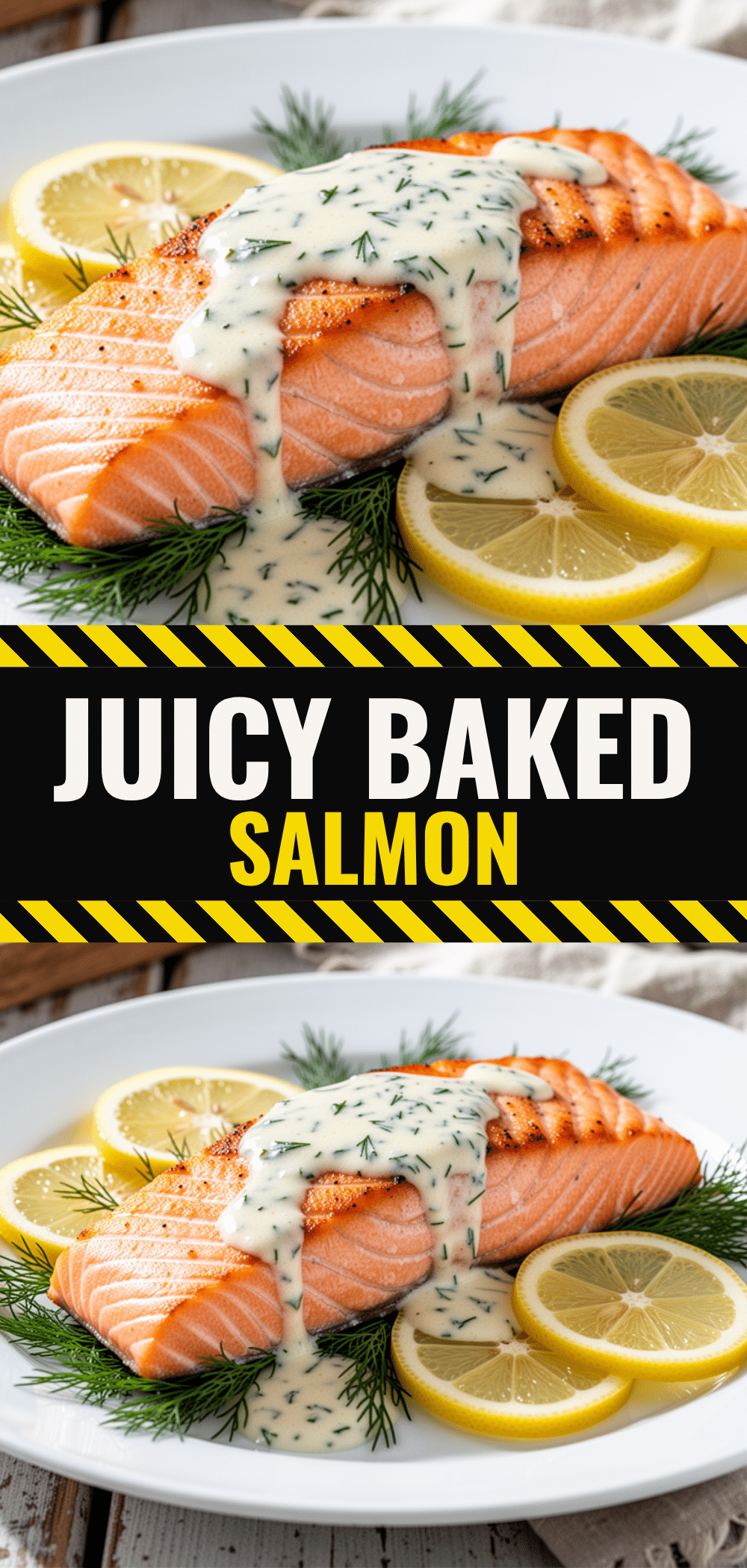
Healthy Baked Salmon with Lemon Dill Sauce
- Total Time: 25 minutes
- Yield: 4 servings 1x
Description
A quick and healthy weeknight dinner featuring baked salmon fillets topped with a creamy, tangy lemon dill sauce. Ready in about 25 minutes with simple, pantry-friendly ingredients.
Ingredients
- 1.5 lbs salmon fillets
- 2 tablespoons olive oil
- 3 cloves garlic, minced
- Salt and black pepper to taste
- 1/2 cup Greek yogurt (plain, non-fat or low-fat)
- 2 tablespoons mayonnaise
- 2 tablespoons lemon juice (freshly squeezed)
- 1 teaspoon lemon zest
- 2 tablespoons fresh dill, chopped
- 1 teaspoon Dijon mustard
- 1 teaspoon honey
- Optional: 1 cup cherry tomatoes, halved; 1 bunch asparagus, trimmed; 2 cups broccoli florets
Instructions
- Preheat oven to 400°F (200°C). Line a large baking sheet with parchment paper.
- In a small bowl, whisk together Greek yogurt, mayonnaise, lemon juice, lemon zest, chopped fresh dill, Dijon mustard, and honey until smooth. Set aside.
- Pat salmon fillets dry with paper towels. Rub with olive oil and season generously with salt and black pepper.
- Place salmon fillets on the prepared baking sheet. If using vegetables, arrange them around the salmon and toss with a little olive oil, salt, and pepper.
- Bake for 12-15 minutes, or until the salmon flakes easily with a fork and is opaque throughout.
- Remove from oven and spoon the lemon dill sauce generously over each fillet.
- Serve immediately, garnished with extra fresh dill and lemon wedges.
Notes
Pat the salmon dry before cooking to ensure it bakes rather than steams. Use fresh dill for the best flavor. The sauce can be made ahead and stored in the fridge. Do not freeze the salmon with the sauce as the dairy may separate.
- Prep Time: 10 minutes
- Cook Time: 15 minutes
- Category: Main Course
- Cuisine: American
Nutrition
- Serving Size: 1 fillet with sauce
- Calories: 320
- Sugar: 3
- Sodium: 350
- Fat: 18
- Saturated Fat: 3
- Carbohydrates: 6
- Fiber: 1
- Protein: 28
Keywords: healthy salmon, baked salmon, lemon dill sauce, quick dinner, weeknight meals, gluten-free, high protein