Last Tuesday, I was standing in my kitchen at 6:45 PM, staring into the refrigerator like it might magically spit out a fully cooked meal if I just waited long enough. It was one of those days where my brain felt like static. I didn’t have the energy to chop, I didn’t want to order takeout (my wallet was crying), and I definitely didn’t want to eat cold cereal for the third night in a row.
Then I saw it: a wild-caught salmon fillet that was about to expire, a bag of frozen edamame I’d been hoarding since January, and some sad-looking rice in the back of the pantry.
I threw it together in a bowl. I didn’t have a plan. I just knew I needed protein, I needed something fast, and I needed it to not taste like despair. I threw the salmon in the pan, tossed the edamame in the microwave, and drizzled everything with a quick soy-ginger glaze I whipped up from scratch. I ate it standing over the sink because the table was covered in mail.
And here’s the thing: it was actually delicious. Really delicious. Not “I’m eating diet food” delicious, but “I want to make this again tomorrow” delicious. It was savory, fresh, packed with protein, and ready in about 15 minutes.
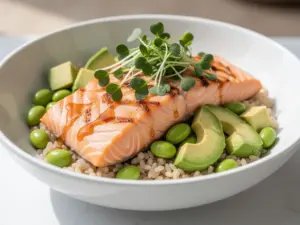
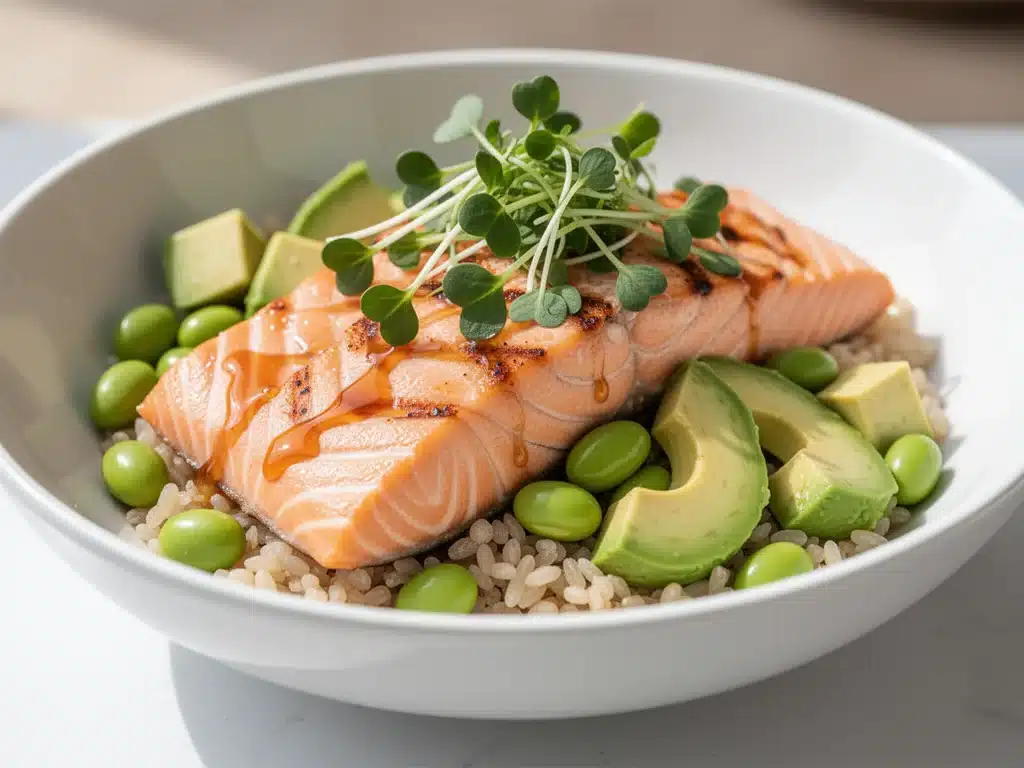
That accidental Tuesday night dinner turned into a habit. I’ve made these High Protein Salmon Power Bowls with Edamame at least a dozen times since then. They’ve become my secret weapon for busy weeknights, for meal-prepping lunches that don’t get soggy, and for when I want to impress a partner without spending three hours in the kitchen.
People always ask me how I eat so much healthy food without feeling deprived. The answer isn’t complicated. It’s about combining high-quality fats, lean protein, and vibrant flavors in a way that feels like a treat, not a chore. This recipe is that answer. It’s simple, it’s nutritious, and honestly? It’s the best thing I’ve cooked this month.
Why You’ll Love This Salmon Bowl Recipe
I’m not going to stand here and tell you this is the healthiest meal in human history, but I will tell you it’s the most practical one I’ve ever mastered. There are about ten reasons I keep coming back to this salmon and edamame combo, but let’s get to the ones that actually matter to your daily life.
It’s Actually Fast
Seventeen minutes. That’s the total time from “I’m hungry” to “I’m eating.” Ten minutes of active chopping and cooking, seven minutes of passive simmering or baking. I make this on weeknights when I get home late and my energy levels are at zero. It doesn’t get faster than this.
Protein-Packed Without the Effort
Skinless salmon fillets are one of those ingredients that do all the heavy lifting for you. You just season them and cook them. Add in the edamame, which is basically a protein bomb in a pod, and you’ve got a meal that keeps you full for hours. No afternoon slump, no craving for snacks two hours later. Just steady energy.
Zero Leftover Stress
I hate leftovers that taste worse the next day. This bowl? It tastes great hot, and it’s surprisingly good cold or room temperature the next day. I meal-prep these every Sunday for my work lunches. The flavors meld together in the fridge, and by Wednesday, the salmon has soaked up enough of that ginger-soy dressing to be even better than day one.
It Feels Fancy But Isn’t
There’s something satisfying about assembling a “bowl.” It looks intentional. It looks like you put in effort. But the effort is mostly just arranging ingredients. I’ve served this to friends who are serious about food, and they always ask for the recipe. It’s impressive without being intimidating.
This is my go-to when I need dinner to just work. No complicated techniques, no weird ingredients, just reliable, delicious food that makes everyone happy. And yes, it’s still the best thing I ate that random Tuesday in October.
Ingredients You’ll Need for Salmon Power Bowls
Here’s the best part: you probably have most of this already. This isn’t a recipe that requires a trip to three different specialty stores. It’s built on pantry staples and fresh basics.
For the Star of the Show:
Skinless salmon fillets (4 pieces, about 6oz each / 170g each) — Look for wild-caught if you can find it; it has a better texture and flavor. Atlantic farmed is fine too, just make sure it’s fresh. The flesh should be firm and smell like the ocean, not fishy. If it smells strong, put it back.
Soy sauce (¼ cup / 60ml) — I use low-sodium soy sauce because it lets me control the saltiness. Tamari is a great gluten-free alternative if that’s your thing. Don’t skimp on quality here; it’s the base of the sauce.
Fresh ginger (1 tablespoon, grated / about 15g) — Yes, fresh. The powdered stuff just doesn’t have that bright, spicy kick that wakes up the salmon. If you must use powdered, use half a teaspoon, but fresh is worth the extra 30 seconds of grating.
Honey (1 tablespoon / 20g) — This balances the saltiness of the soy and the heat of the ginger. Maple syrup works too if you’re avoiding refined sugar, but honey gives it that glossy finish.
Sesame oil (1 teaspoon / 5ml) — Just a teaspoon. This is for flavor, not cooking. It adds that nutty aroma that makes everything taste like it came from a high-end Asian restaurant.
For the Bowl Base:
Edamame (1 cup, shelled / 150g) — Frozen is perfectly fine and often cheaper. Look for “shelled” or “dehusked” edamame to save time. If you can only find them in the pod, don’t worry—shelling them is actually kind of therapeutic. Just make sure you buy the ones meant to be eaten (they’re sweeter) rather than the cooking ones (which are for boiling and shelling).
Cooked rice (2 cups / 400g) — Jasmine or short-grain sushi rice works best because it’s sticky and holds the sauce well. Quinoa is a great protein-packed substitute if you’re going low-carb. Brown rice works too, but it’s chewier and doesn’t absorb the sauce as nicely.
For the Crunch and Color:
Cucumber (1 medium, sliced / about 150g) — I like Persian cucumbers because they’re less watery and have thinner skins. English cucumbers are good too. Just slice them into half-moons.
Avocado (1 ripe, sliced / about 150g) — This adds healthy fats and creaminess. If your avocado is rock hard, you’re using the wrong one. It should yield slightly to gentle pressure.
Green onions (2 stalks, sliced thinly / about 30g) — For that fresh onion bite and a pop of green. The white parts and green parts are both good; don’t throw any away.
Chili flakes or Sriracha (to taste) — Optional, but I recommend it. A little heat cuts through the richness of the salmon and avocado.
Sesame seeds (1 tablespoon / 10g) — Toasted sesame seeds are better, but regular works. They add a nice textural contrast to the soft rice and fish.
Equipment Needed
You don’t need fancy equipment for this. Here’s what I actually use.
Non-stick skillet or baking sheet — I usually bake the salmon because it’s less messy and easier to clean. If you pan-sear it, use a good non-stick pan so the skin (if you leave it on) doesn’t stick. I prefer skinless for these bowls, so any pan works.
Microwave-safe bowl — For heating the edamame. It’s the fastest method. If you’re boiling them, you’ll need a pot and a strainer, but that takes longer.
Small mixing bowl — For whisking the soy-ginger-honey sauce. Any small bowl works.
Sharp knife and cutting board — For slicing the cucumber and avocado. A dull knife makes slicing avocado a nightmare.
Measuring spoons — Pretty standard stuff. Dollar store versions work fine.
Large serving bowls — Or four individual bowls. I like serving these in wide, shallow bowls so all the ingredients are visible. It makes the meal feel more substantial.
Grater — For the fresh ginger. A microplane works best, but a box grater is fine. If you don’t have one, just mince the ginger as finely as possible.
How to Make It: Step-by-Step
Alright, let’s make this! I’m walking you through exactly how I do it, including the little tricks I’ve picked up.
Step 1: Prep Your Ingredients (5 minutes)
Before you start cooking, get everything ready. This is called mise en place, which is a fancy French term for “don’t burn the garlic because you were slicing cucumbers.” Slice your cucumber and avocado. Slice your green onions. Grate your ginger. Put all your sauce ingredients in the small bowl and whisk them together. Set them aside. Once the salmon is in the pan, things move fast, so having your veggies ready is crucial.
Step 2: Heat the Edamame (2 minutes)
Place the shelled edamame in a microwave-safe bowl. Add a splash of water (about 2 tablespoons) and cover it with a damp paper towel. Microwave on high for 2-3 minutes until heated through. Drain any excess water. If you’re boiling them, cook in salted water for 3-4 minutes, then drain. Set aside.
Step 3: Cook the Salmon (8-10 minutes)
Preheat your oven to 400°F (200°C). Line a baking sheet with parchment paper or foil for easy cleanup. Place the salmon fillets on the sheet. Brush them generously with half of the soy-ginger sauce. Season with a pinch of black pepper. Bake for 8-10 minutes, depending on thickness. The salmon is done when it flakes easily with a fork and is opaque throughout. Do not overcook it! Dry salmon is sad salmon. Take it out when it’s just barely cooked.
Quick tip: If you prefer pan-searing, heat a teaspoon of oil in a skillet over medium-high heat. Place salmon skin-side down (if skin is on) and cook for 4 minutes. Flip and cook for another 3-4 minutes. Brush with the remaining sauce in the last minute of cooking.
Step 4: Assemble the Bowls (2 minutes)
Divide the cooked rice among four bowls. Top each bowl with a portion of the flaked salmon. Add a scoop of the warm edamame. Arrange the cucumber slices and avocado slices on top. Drizzle the remaining sauce over everything. Sprinkle with green onions, sesame seeds, and chili flakes if using.
Step 5: Serve Immediately
Eat while the salmon is warm. The contrast between the hot fish/rice and the cool cucumber/avocado is what makes this bowl special. Mix it all together with a fork or chopsticks for the best flavor distribution.
Total Time: About 17 minutes (5 minutes prep, 12 minutes cooking)
Expert Tips & Tricks
Here’s everything I’ve learned from making this dozens of times. These tips will save you from my mistakes.
Don’t Overcook the Salmon
This is the #1 mistake people make. Salmon continues to cook slightly after it’s removed from the heat. Take it out when it looks almost done in the center. It will finish cooking on the hot rice. If you wait until it’s perfectly done in the pan, it’ll be dry by the time you eat it.
Toast Your Sesame Seeds
It takes 30 seconds in a dry pan, but toasted sesame seeds have a completely different, nuttier flavor. It’s a small step that makes a big difference. I keep a jar of toasted seeds in my pantry specifically for this.
Use Day-Old Rice
If you have time, use rice that was cooked the day before and refrigerated. Freshly cooked rice is too wet and sticky, which can make the bowl soggy. Day-old rice is firmer and holds up better to the sauce. If you’re making it fresh, spread the hot rice on a baking sheet to cool it down quickly before serving.
Room Temperature Avocado
Take your avocado out of the fridge 10 minutes before slicing. Cold avocado is harder to slice cleanly and doesn’t have the same creamy texture. It’s a small thing, but it matters.
Common Mistakes (and how to avoid them):
Mistake: Sauce is too salty
Fix: Use low-sodium soy sauce and taste before adding extra salt. The edamame and cheese (if you add any) also have salt. You can always add more, but you can’t take it away.
Mistake: Salmon is dry
Fix: Check it early. Thinner fillets cook in 6 minutes. Thicker ones take 10. Use a thermometer if you’re unsure—145°F (63°C) is the safe temp, but I pull it at 135°F (57°C) for medium.
Mistake: Bowl is boring
Fix: Add color! Red peppers, shredded carrots, or purple cabbage make the bowl visually appealing, which makes it taste better. Eat with your eyes first.
Variations & Substitutions
Once you’ve nailed the basic version, here’s how you can mix it up. I’ve tried all of these.
Tofu Power Bowl
Swap the salmon for extra-firm tofu. Press the tofu for 20 minutes, cube it, and bake it at 400°F for 25 minutes until crispy. It absorbs the sauce beautifully and is a great vegetarian option.
Shrimp Swap
Use shrimp instead of salmon. Shrimp cooks much faster—2-3 minutes per side in a pan. It’s leaner and has a different flavor profile, but the sauce works perfectly with it.
Low-Carb Version
Skip the rice and use cauliflower rice. Sauté the cauliflower rice with a little sesame oil and garlic for 5 minutes. It’s lighter and keeps the bowl keto-friendly.
Spicy Kick
Add a tablespoon of Sriracha or gochujang to the sauce. Mix it well with the soy sauce and honey. This turns the bowl into a spicy, savory delight. My kids love this version, though they ask for less chili flakes on top.
Mediterranean Twist
Swap the ginger and soy sauce for lemon juice, olive oil, and dried oregano. Add chopped tomatoes and feta cheese. It’s a totally different vibe but still uses the same assembly method.
Serving & Storage
How to Serve:
I usually serve this straight from the kitchen, with chopsticks or a fork. It’s casual but elegant. Here are some side dishes that pair well:
- Edamame in the pod — As an appetizer before the bowl.
- Miso soup — A warm, comforting start to the meal.
- Seaweed salad — Adds more crunch and iodine.
- Simple green salad — With a light vinaigrette if you want something fresh.
Storage Instructions:
Refrigerator:
Store in an airtight container for up to 3 days. Keep the sauce separate if you’re meal-prepping for more than a day, so the rice doesn’t get soggy. The salmon and edamame store well together.
Reheating:
Best method: Microwave the rice and edamame for 1-2 minutes. Reheat the salmon gently for 30-60 seconds just to warm it through. Overheating salmon makes it rubbery. Add fresh avocado and cucumber after reheating.
Freezing:
I don’t recommend freezing this bowl. The avocado turns brown, the rice texture changes, and the salmon can become dry. It’s best enjoyed fresh. If you have leftovers, eat them within 3 days.
Nutrition Information
I’m not a nutritionist, but here’s the breakdown if you’re tracking. This is approximate per bowl (based on 4 servings).
| Nutrient | Amount |
|---|---|
| Calories | 450 |
| Protein | 35g |
| Carbs | 40g |
| Fiber | 6g |
| Fat | 18g |
| Sodium | 600mg |
What’s Good:
High protein from the salmon and edamame. Healthy fats from the avocado and salmon. Good fiber from the edamame and vegetables. Omega-3s from the fish, which are great for brain health.
What to Know:
Sodium can be high if you use regular soy sauce. Use low-sodium to cut that in half. Carbs come from the rice; use cauliflower rice to reduce them significantly.
My Take:
This is nutrient-dense comfort food. It’s not “diet” food in the restrictive sense; it’s real food that fuels your body. I eat this when I want to feel good and look good. It’s balanced, satisfying, and doesn’t leave me feeling heavy.
Final Thoughts
So that’s my go-to High Protein Salmon Power Bowls with Edamame! I’ve probably talked your ear off at this point, but when you make a recipe this often, you have a lot to say about it.
This has saved weeknight dinners more times than I can count. It’s my answer to “what’s for dinner” when I’m tired, don’t want takeout, and still want something that tastes really good. My family is happy, my energy levels are stable, and I’m happy because I’m not stressed about cooking.
Make it yours! Try different add-ins, swap in your favorite vegetables, adjust the spice level. The best recipes are the ones you adapt to your family’s tastes. If you want to try another quick, healthy bowl, check out my Quinoa Chicken Power Bowls for a different protein option.
If you make this, drop a comment and let me know what you think! I love hearing how recipes turn out in your kitchen. And if something doesn’t work, tell me that too—I’m here to help troubleshoot. Happy cooking! And I hope your kitchen smells half as good as mine does right now.
Frequently Asked Questions
Can I use canned salmon instead of fresh?
You can, but the texture will be very different. Canned salmon is softer and flakier, which works if you’re breaking it up into small pieces. I prefer fresh or frozen fillets because they hold their shape better in the bowl. If you use canned, drain it well and mix it gently with the sauce so it doesn’t turn into mush.
Why did my salmon turn out dry?
Most likely, you overcooked it. Salmon cooks very quickly. Check it at 6 minutes if the fillets are thin. It should look slightly translucent in the very center when you take it out. It will continue to cook from the residual heat. If you’re unsure, use a meat thermometer—pull it at 135°F (57°C) for medium.
Can I meal prep this for the whole week?
You can prep for 3-4 days. After that, the avocado starts to brown and the rice loses its texture. I meal prep on Sunday and eat these Monday-Wednesday. For Thursday and Friday, I make fresh rice or use a different base like quinoa or greens.
Is edamame the same as soybeans?
Yes! Edamame are young, green soybeans. They are sweeter and softer than mature soybeans, which are usually dried and used for tofu or soy milk. You can’t substitute dried soybeans in this recipe. You need the fresh or frozen green pods or shelled beans.
How do I reheat the salmon without it getting rubbery?
Low and slow is the key. Microwave it on 50% power for 30-second intervals. Or, better yet, eat it cold or room temperature. Many people find that salmon tastes better cold than reheated. If you must heat it, do it gently.
Can I make this gluten-free?
Yes! Just swap regular soy sauce for tamari or a gluten-free soy sauce alternative. The rest of the ingredients are naturally gluten-free. Make sure your edamame is plain and not seasoned with any wheat-based additives.
Pin This Recipe!
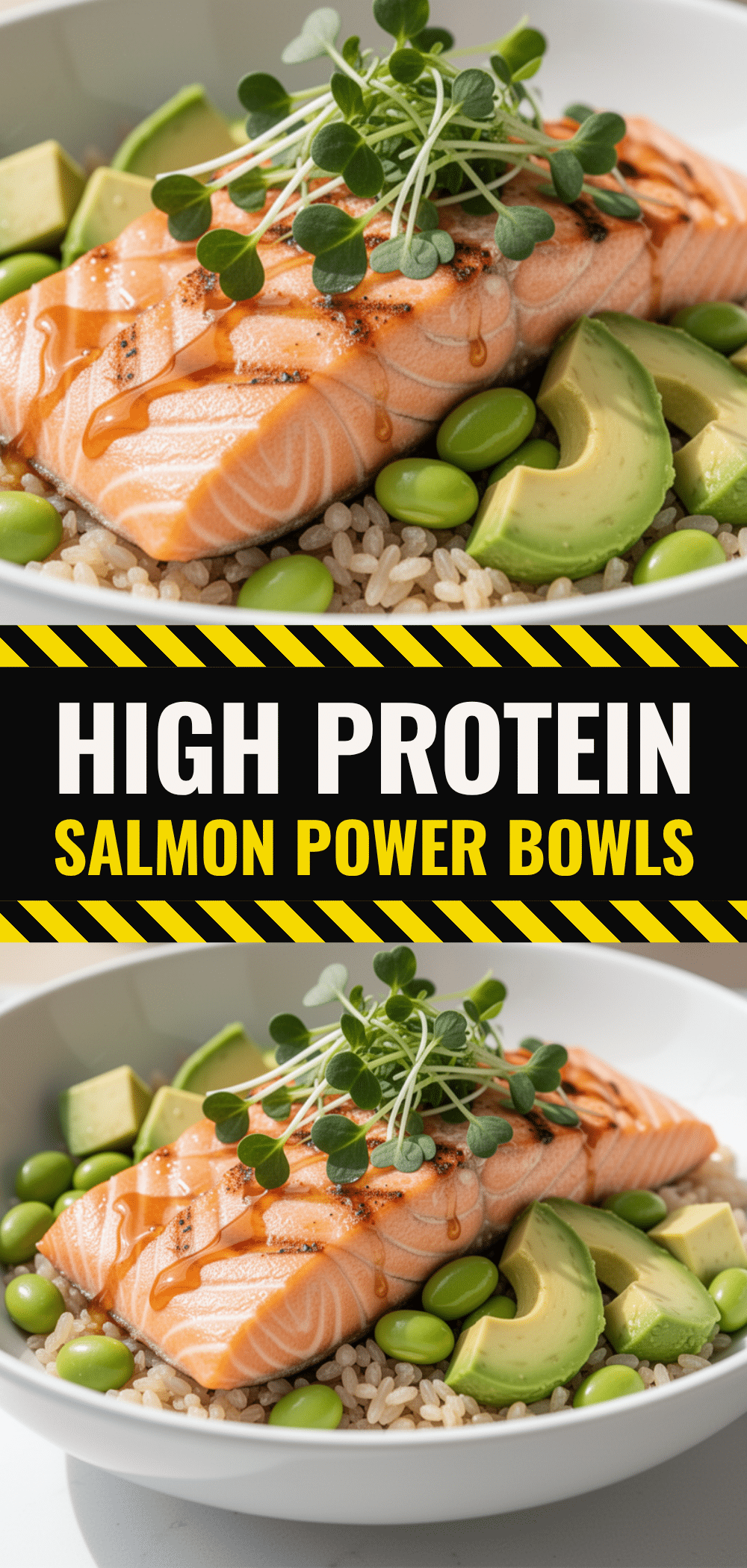
High Protein Salmon Power Bowls: 5-Ingredient Edamame Recipe
- Total Time: 17 minutes
- Yield: 4 servings 1x
Description
A quick, nutritious, and delicious salmon bowl featuring wild-caught salmon, edamame, and a savory soy-ginger glaze, ready in under 20 minutes.
Ingredients
- 4 skinless salmon fillets (about 6oz / 170g each)
- 1 cup shelled edamame (150g)
- 2 cups cooked rice (Jasmine or short-grain)
- 1 medium cucumber, sliced into half-moons
- 1 ripe avocado, sliced
- 2 stalks green onions, thinly sliced
- 1 tablespoon fresh ginger, grated
- 1 tablespoon honey
- 1 teaspoon sesame oil
- ¼ cup low-sodium soy sauce (or Tamari for gluten-free)
- 1 tablespoon toasted sesame seeds
- Chili flakes or Sriracha, to taste
- Black pepper, for seasoning
Instructions
- Prep ingredients: Slice cucumber, avocado, and green onions. Grate ginger. Whisk together soy sauce, honey, ginger, and sesame oil in a small bowl. Set aside.
- Heat edamame: Place shelled edamame in a microwave-safe bowl with 2 tablespoons of water. Cover with a damp paper towel and microwave on high for 2-3 minutes until heated through. Drain excess water.
- Cook salmon: Preheat oven to 400°F (200°C). Line a baking sheet with parchment paper. Place salmon fillets on the sheet, brush generously with half of the sauce, and season with black pepper. Bake for 8-10 minutes until the salmon flakes easily with a fork and is opaque throughout.
- Assemble bowls: Divide cooked rice among four bowls. Top each with a salmon fillet, a scoop of warm edamame, cucumber slices, and avocado slices.
- Serve: Drizzle the remaining sauce over the bowls. Sprinkle with green onions, sesame seeds, and chili flakes. Serve immediately while the salmon is warm.
Notes
Do not overcook the salmon; it continues to cook after removal from heat. For best texture, use day-old rice or spread fresh rice on a baking sheet to cool. Toast sesame seeds in a dry pan for 30 seconds for enhanced flavor. Store leftovers in an airtight container for up to 3 days, keeping sauce separate if meal-prepping.
- Prep Time: 5 minutes
- Cook Time: 12 minutes
- Category: Main Course
- Cuisine: Asian Fusion
Nutrition
- Serving Size: 1 bowl
- Calories: 450
- Sugar: 12
- Sodium: 600
- Fat: 18
- Saturated Fat: 3
- Carbohydrates: 40
- Fiber: 6
- Protein: 35
Keywords: salmon bowl, edamame recipe, high protein, healthy dinner, quick meals, meal prep, gluten-free option, omega-3