Last Thursday, I was staring into the refrigerator like it owed me money. The light flickered, my dog was sighing heavily by my feet, and I had exactly forty-five minutes before my husband got home from work. I had a piece of salmon in there, slightly past its “perfect” date but still good, and a bag of rice that had seen better days. I was about to cave and order sushi for $35 when I remembered a bowl I’d made three weeks prior—one that took twenty minutes, cost less than ten dollars, and tasted like a vacation.
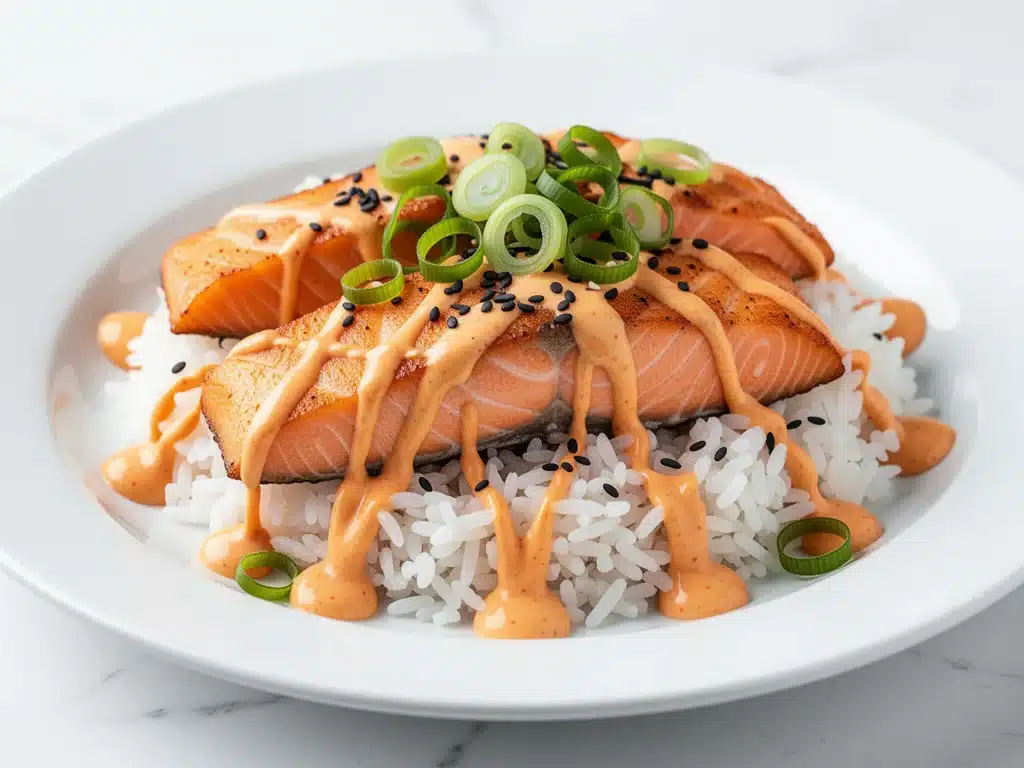
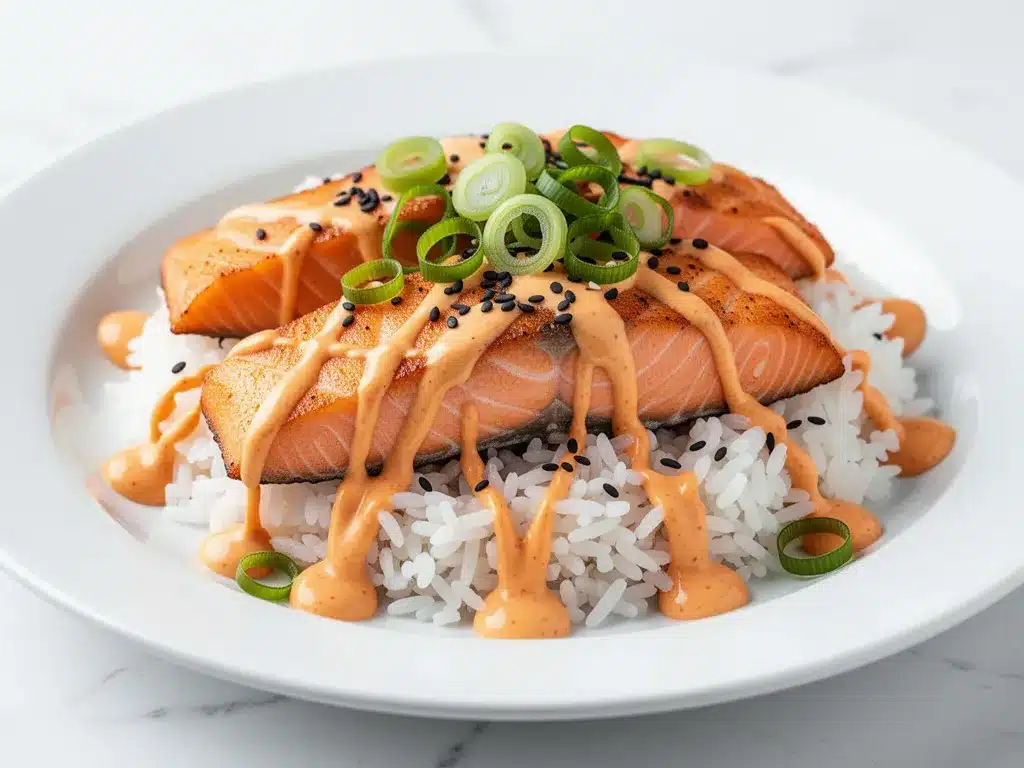
That was the night I fell hard for the salmon rice bowl with spicy mayo drizzle. Not just any bowl, but the kind where the salmon is crisp on the outside, tender on the inside, and the spicy mayo is so good you want to drink it with a spoon. I’ve made this recipe at least fifteen times since that Thursday night. Sometimes it’s a quick weeknight dinner, sometimes it’s a fancy date night at home, and sometimes it’s just me eating it straight from the container because I couldn’t wait for anyone else to come home.
Here’s the thing about salmon rice bowls: they look complicated. They look like something you’d see in a high-end Japanese restaurant with a price tag that makes your wallet weep. But once you know the trick to the spicy mayo and how to get that salmon just right, you realize this is one of those recipes you’ll make on repeat. It’s fast, it’s fresh, and it feels indulgent without actually being heavy. Plus, it’s incredibly customizable. If you’re not a fan of spicy, tone down the mayo. If you love heat, go crazy. I’ve served these to picky eaters and food snobs alike, and everyone leaves the table happy.
I’m going to walk you through exactly how I make this. No fancy equipment, no obscure ingredients you can’t find at a regular grocery store. Just real food, real flavor, and a sauce that changes everything. Let’s get cooking.
Why You’ll Love This Salmon Rice Bowl
There are a lot of reasons I keep coming back to this salmon rice bowl, but they all boil down to one thing: it works. Every single time. Here’s why it deserves a permanent spot in your weekly rotation.
Stupid Simple Spicy Mayo — Seriously, if you can mix two ingredients, you can make this sauce. Mayonnaise, sriracha, a squeeze of lime, and a teaspoon of sesame oil. That’s it. You don’t need to cook it, you don’t need to blend it. Just whisk and drizzle. I’ve made this sauce for parties, for lunches, for dipping vegetables, and it’s always the star of the show.
Under 20 Minutes Active Time — From the moment I turn on the stove to the moment I take the first bite, it’s about 15-20 minutes. The salmon cooks in 8 minutes. The rice cooks while I prepping the veggies. This is the ultimate weeknight hero when you’re tired but still want to eat something that tastes like you tried.
Feels Fancy, Costs Pennies — A salmon fillet at the grocery store is usually $8-$12. With rice and veggies, this feeds two people generously for under $20. Compare that to a sushi roll dinner for two, which runs about $40 with tax and tip, and this wins easily. It feels like a treat, but it’s budget-friendly.
Meal Prep Friendly — I’m a huge believer in making components ahead. I often cook a big batch of rice on Sunday and store the salmon separately. When I’m ready to eat, I just reheat the rice and pan-sear the salmon fresh. The spicy mayo keeps in the fridge for a week, so I make a big batch and use it for everything from this bowl to grilled chicken sandwiches.
Crowd-Pleaser Factor — I’ve made this for my vegetarian sister (she swaps the salmon for crispy tofu), my gluten-free brother (just swap the soy sauce for tamari), and my kids (who love the spicy mayo so much they’ll eat it even if the salmon is a little overcooked). It’s versatile enough to handle any dietary need or preference.
This is my go-to when I want something that feels special but doesn’t require a recipe book or a trip to three different stores. It’s reliable, delicious, and always a hit.
Ingredients You’ll Need
Here’s the best part: you probably have most of this already in your pantry or fridge. I’m particular about a few things here, but mostly, this is about fresh, simple ingredients coming together.
For the Salmon
Salmon fillets (2 pieces, about 6oz each / 170g each) — I like to use wild-caught sockeye or coho if I can find it, but farmed Atlantic is fine too. Just make sure it’s fresh and smells clean, not fishy. Pat it dry before cooking—that’s the secret to a good sear.
Olive oil or avocado oil (2 tablespoons / 30ml) — I use avocado oil because it has a higher smoke point, which is great for searing. Olive oil works too, just keep the heat medium, not high.
Salt and black pepper — Coarse sea salt is my preference, but kosher salt works too. Freshly cracked black pepper adds a nice bite.
Soy sauce (1 tablespoon / 15ml) — I use low-sodium soy sauce so I can control the saltiness. Regular soy sauce is fine, just be careful not to over-salt. Tamari is a good gluten-free option.
For the Spicy Mayo
Mayonnaise (1/2 cup / 120g) — I use Hellmann’s or Kewpie. Kewpie is richer and more tangy, which I love, but regular mayo works perfectly. Don’t use light mayo—it doesn’t have the same texture or flavor.
Sriracha (2-3 tablespoons / 30-45ml) — This is where you control the heat. Start with 2 tablespoons if you’re sensitive to spice, and add more if you want it to kick. I like it medium-hot.
Lime juice (1 tablespoon / 15ml) — Freshly squeezed is non-negotiable. Bottled lime juice tastes flat and artificial. It cuts through the richness of the mayo and salmon.
Sesame oil (1 teaspoon / 5ml) — Just a little goes a long way. It adds that nutty, Asian-inspired aroma. Toasted sesame oil is best.
White sesame seeds (1 tablespoon / 10g) — For garnish. Toasted sesame seeds are even better, but raw works in a pinch.
For the Bowl
Rice (1 cup uncooked / 185g) — I use short-grain Japanese rice or sushi rice. It’s sticky and perfect for bowls. Jasmine rice works too, but it’s fluffier. Brown rice is a healthier option, but it takes longer to cook.
Avocado (1 medium, sliced / about 150g) — Creamy, rich, and adds healthy fats. I slice it thinly for easier eating. If avocados are out of season, cucumber or radishes work well.
Cucumber (1/2 medium, sliced or julienned / about 100g) — Adds a cool, crisp contrast to the warm salmon. I like to peel it first, then slice it into half-moons.
Edamame (1/2 cup, shelled / 75g) — I buy frozen, shelled edamame. Just thaw them in hot water for a minute. They add protein and a nice pop of green.
Nori sheets (2 sheets, cut into strips / 10g) — Seaweed adds umami and texture. I cut them into thin strips with scissors. You can skip this if you don’t like seaweed, but I don’t recommend it.
Green onions (2 stalks, thinly sliced / 20g) — For garnish and a mild oniony crunch. White and green parts are both fine.
Optional Add-ins: Pickled ginger, daikon radish, shredded carrots, or a soft-boiled egg. I keep it simple usually, but these add nice variety.
Shopping Tips
Sourcing Salmon: Look for salmon that is bright orange-red and firm to the touch. If it looks dull or feels mushy, put it back. Ask your fishmonger for the freshest catch of the day.
Kewpie Mayo: If you can find Kewpie mayo at an Asian grocery store, buy it. It’s made with egg yolks and rice vinegar, which gives it a deeper, richer flavor than standard mayo. It’s worth the extra few dollars.
Rice: Don’t skimp on the rice. Good quality sushi rice makes a huge difference in texture. I buy mine in 5lb bags from Costco or an Asian market—it lasts forever and costs less per pound.
Equipment Needed
You don’t need fancy equipment for this. Here’s what I actually use, and what you can swap if you don’t have it.
Non-stick skillet or Cast iron skillet — I use a 10-inch non-stick skillet for the salmon. It’s easier to get a clean sear and less likely to stick. Cast iron works too, but you need to make sure it’s well-seasoned and hot enough.
Rice cooker — I’m obsessed with my rice cooker. It sets and forgets, and the rice comes out perfect every time. If you don’t have one, a saucepan with a tight-fitting lid works fine. Just keep an eye on the heat.
Sharp knife — For slicing the avocado and cucumber. A dull knife will mush the avocado. Learn to sharpen your knives—it makes cooking so much easier.
Small bowl — For mixing the spicy mayo. Any small bowl will do.
Measuring spoons — For the soy sauce and sesame oil. You don’t need to be perfect, but close is better.
Spatula — To flip the salmon and serve. A thin, flexible spatula works best.
Scissors — For cutting the nori sheets. I find scissors easier than a knife for this.
Optional: A bamboo sushi mat isn’t needed here, but if you like to roll things, it’s handy. I don’t use it for bowls.
How to Make It: Step-by-Step
Alright, let’s make this! I’m walking you through exactly how I do it, including the little tricks I’ve picked up over time.
Step 1: Cook the Rice (Start First)
Rinse the rice under cold water until the water runs clear. This removes excess starch and prevents the rice from being gummy. Add the rinsed rice to your rice cooker or saucepan with the appropriate amount of water (usually a 1:1 ratio for sushi rice, but check your package). Cook according to your appliance’s instructions. Once done, let it sit covered for 10 minutes to steam. Fluff it with a fork or a rice paddle. Set aside.
Step 2: Make the Spicy Mayo
While the rice is cooking, mix the spicy mayo. In a small bowl, combine the mayonnaise, sriracha, lime juice, and sesame oil. Whisk until smooth and creamy. Taste and adjust. Want it spicier? Add more sriracha. Want it tangier? Add more lime. Set it aside. It will thicken slightly as it sits.
Step 3: Prep the Veggies
Slice the avocado into thin wedges. Slice the cucumber into half-moons or matchsticks. Slice the green onions. If you’re using edamame, thaw them in hot water and drain. Cut the nori sheets into thin strips. Have everything ready in small bowls or on a plate. This is called *mise en place*, and it makes the cooking process stress-free.
Step 4: Season the Salmon
Pat the salmon fillets dry with paper towels. This is crucial for a good sear. Season both sides generously with salt and black pepper. Lightly brush both sides with olive oil. The oil helps the seasoning stick and promotes browning.
Step 5: Sear the Salmon
Heat your skillet over medium-high heat. Once it’s hot, add the salmon fillets skin-side down (if skin-on) or presentation-side down. Press down gently with a spatula for 10 seconds to prevent curling. Cook for 4-5 minutes without moving it. You want a golden-brown crust. Flip the salmon and cook for another 3-4 minutes, or until the internal temperature reaches 145°F (63°C) for medium-well, or 125°F (52°C) for medium. Remove from heat and let rest for 2 minutes.
Step 6: Assemble the Bowl
Take a large bowl. Scoop a generous portion of warm rice into the bottom. Arrange the salmon on top of the rice, either whole or flaked into chunks. Arrange the avocado, cucumber, edamame, and green onions around the salmon. Drizzle the spicy mayo generously over everything. Sprinkle with toasted sesame seeds and nori strips. Serve immediately while the salmon is warm and the rice is fresh.
Total Time: About 20 minutes (10 minutes active, 10 minutes hands-off for rice)
Expert Tips & Tricks
Here’s everything I’ve learned from making this dozens of times. These tips will save you from my mistakes.
Pat the Salmon Dry
This is the #1 tip. Wet salmon steams instead of sears. If you don’t pat it dry, you’ll get gray, soft salmon instead of crispy, golden salmon. I learned this the hard way with a soggy piece of fish that tasted like disappointment.
Don’t Move the Salmon
When you put the salmon in the pan, don’t touch it. Let it develop a crust. If you try to flip it too early, it will stick to the pan and fall apart. If it’s ready, it will release easily. If not, give it another minute.
Toast Your Sesame Seeds
Toasting sesame seeds in a dry pan for 2-3 minutes brings out their nutty flavor. It’s a small step, but it elevates the whole dish. I keep a jar of toasted sesame seeds on my counter now.
Use Kewpie Mayo
I can’t stress this enough. Kewpie mayo is richer, tangier, and more flavorful than standard mayo. It makes the spicy mayo taste like it came from a restaurant. If you can find it, buy it. If not, regular mayo works, but it won’t be as good.
Warm the Bowls
If you want to go the extra mile, warm your bowls in the oven or microwave before assembling. It keeps the rice hot longer and makes the eating experience more comforting.
Variations & Substitutions
Once you’ve nailed the basic version, here’s how you can mix it up. I’ve tried all of these.
Tuna Bowl
Swap the salmon for seared ahi tuna. Sear for 1-2 minutes per side for rare tuna. It’s faster and has a different flavor profile. Great for a lighter option.
Shrimp Bowl
Use large shrimp instead of salmon. Sauté for 2-3 minutes per side. Toss with a little garlic and butter. Quick and delicious.
Vegetarian Bowl
Skip the fish and use crispy tofu or chickpeas. Marinate the tofu in soy sauce and ginger before pan-frying. Add extra veggies like carrots, radishes, and pickled daikon.
Spicy Tuna Mayo
Add a little chopped raw tuna to the spicy mayo for a spicy tuna bowl experience. Mix it gently and spoon it over the rice.
Gluten-Free
Use tamari instead of soy sauce. Check your sriracha label (most are GF, but some have wheat). Everything else is naturally GF.
Dairy-Free
The recipe is already dairy-free, but if you want to avoid mayo, use a vegan mayo alternative. It’s not quite the same, but it works.
Serving & Storage
How to Serve:
I usually serve this straight from the stove. The contrast of warm salmon and rice with cool veggies is what makes it special. Add a side of miso soup or a simple green salad for a complete meal.
Leftovers:
Store leftovers in an airtight container in the fridge for up to 2 days. The salmon will lose some texture, so it’s best eaten cold or reheated gently. The spicy mayo keeps for 5 days in the fridge.
Reheating:
Reheat the rice in the microwave with a splash of water. Reheat the salmon gently in the oven at 350°F for 5-7 minutes, or eat it cold. Don’t microwave the salmon on high—it gets rubbery.
Freezing:
I don’t recommend freezing the salmon. It loses its texture. The rice can be frozen, but it will be grainy when thawed. Best to make fresh.
Nutrition Information
I’m not a nutritionist, but here’s the breakdown if you’re tracking. This is per serving (1 bowl with half the salmon and half the rice).
Based on 2 servings:
| Nutrient | Amount |
|---|---|
| Calories | 520 |
| Protein | 35g |
| Carbs | 45g |
| Fiber | 5g |
| Fat | 22g |
| Saturated Fat | 4g |
| Cholesterol | 75mg |
| Sodium | 680mg |
What’s Good:
High in protein from the salmon. Good fats from the avocado and salmon. Rich in omega-3s. The veggies add fiber and vitamins.
What to Know:
Higher in calories due to the mayo and rice. Contains soy and sesame. Can be modified for gluten-free or dairy-free diets.
My Take:
Look, this is a balanced meal. It’s not a diet food, but it’s not junk food either. It’s real, wholesome ingredients. When I want to make it lighter, I use less mayo and more veggies. But usually? I just enjoy it as is. It’s a treat that’s also nutritious.
Final Thoughts
So that’s my salmon rice bowl with spicy mayo drizzle! I’ve probably talked your ear off at this point, but when you make a recipe this often, you have a lot to say about it. This has saved weeknight dinners more times than I can count. It’s my answer to “what’s for dinner” when I’m tired, don’t want takeout, and still want something that tastes really good. My kids are happy, my husband’s happy, and I’m happy because I’m not stressed about cooking.
Make it yours! Try different add-ins, swap in your favorite vegetables, adjust the spice level. The best recipes are the ones you adapt to your family’s tastes. If you make this, drop a comment and let me know what you think! I love hearing how recipes turn out in your kitchen. And if something doesn’t work, tell me that too—I’m here to help troubleshoot.
Happy cooking! And I hope your kitchen smells half as good as mine does right now.
Frequently Asked Questions
Can I use frozen salmon?
Yes, but you need to thaw it completely first. Pat it dry very well. Frozen salmon can be watery, so extra drying is key. Fresh salmon is better for searing, but frozen works in a pinch.
Why is my spicy mayo too spicy?
Sriracha brands vary in heat. Start with 1 tablespoon and add more gradually. If it’s already too spicy, add more mayo or a little lime juice to balance it out. You can also add a teaspoon of honey to sweeten it.
Can I make this ahead for meal prep?
Yes! Cook the rice and make the spicy mayo ahead. Store the salmon separately and cook it fresh when you’re ready to eat. Reheat the rice and assemble. It’s much better than reheating cooked salmon.
What kind of rice is best?
Short-grain Japanese rice or sushi rice is best because it’s sticky and holds together well. Jasmine rice is too fluffy. Brown rice is healthier but has a different texture. I prefer white sushi rice for this bowl.
Can I use regular mayo instead of Kewpie?
Yes, but Kewpie is richer and tangier. Regular mayo works, but the flavor won’t be as deep. If you use regular mayo, add a little extra lime juice and sesame oil to compensate.
How do I know when the salmon is done?
The easiest way is to use a thermometer. 125°F (52°C) for medium, 145°F (63°C) for well-done. You can also check by flaking it with a fork. If it flakes easily and is opaque, it’s done.
Can I add other vegetables?
Absolutely! Shredded carrots, radishes, pickled ginger, and seaweed salad all work great. Get creative with what you have in your fridge.
Pin This Recipe!
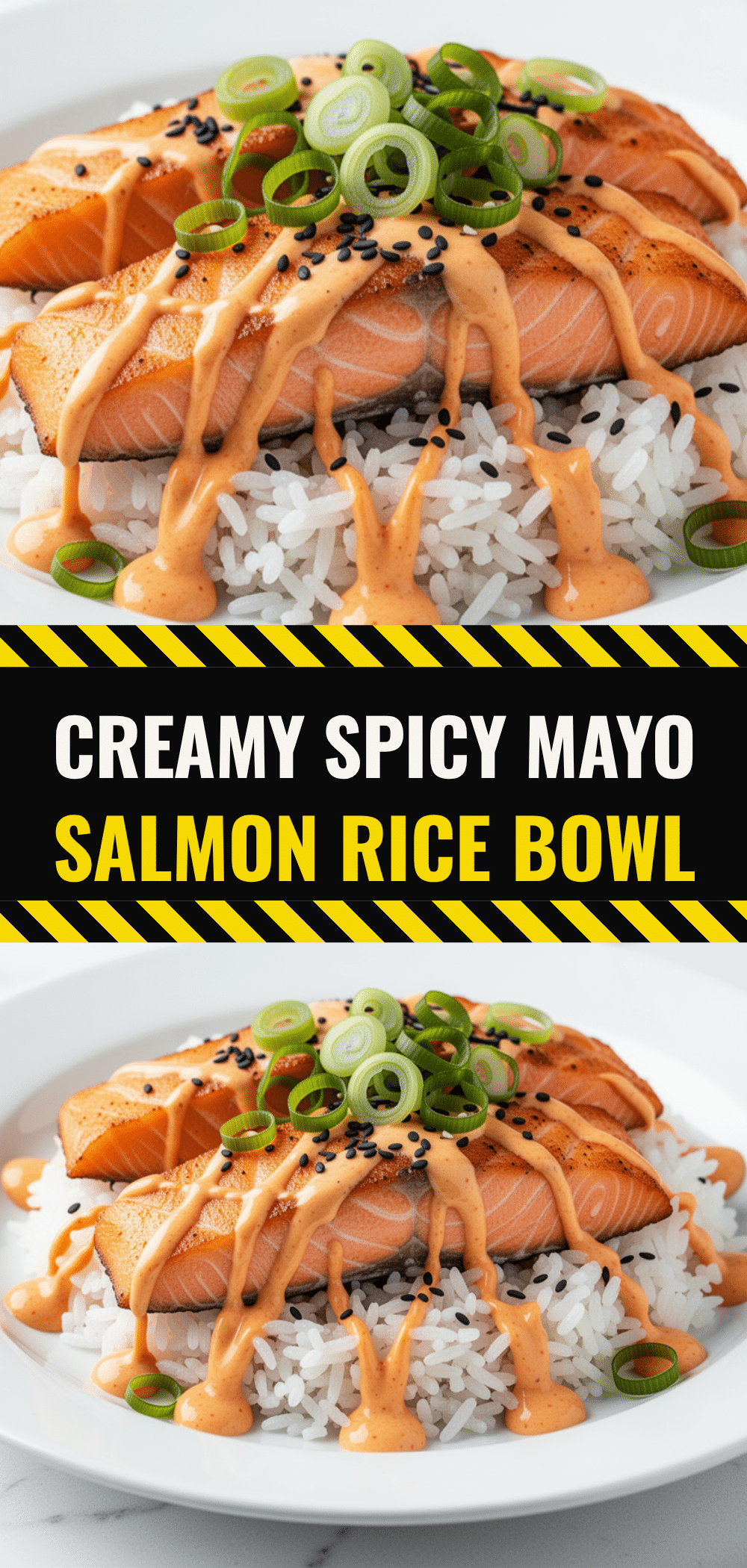
Salmon Rice Bowl: Easy Spicy Mayo Recipe
- Total Time: 20 minutes
- Yield: 2 servings 1x
Description
A quick and customizable weeknight dinner featuring pan-seared salmon, fluffy rice, fresh vegetables, and a creamy spicy mayo drizzle. Ready in under 20 minutes.
Ingredients
- 2 salmon fillets (about 6oz each)
- 2 tablespoons olive oil or avocado oil
- Salt and black pepper to taste
- 1 tablespoon soy sauce (or tamari for gluten-free)
- 1 cup uncooked short-grain Japanese or sushi rice
- 1/2 cup mayonnaise (Hellmann’s or Kewpie)
- 2–3 tablespoons sriracha
- 1 tablespoon lime juice (freshly squeezed)
- 1 teaspoon toasted sesame oil
- 1 tablespoon white sesame seeds
- 1 medium avocado, sliced
- 1/2 medium cucumber, sliced or julienned
- 1/2 cup shelled edamame
- 2 nori sheets, cut into strips
- 2 stalks green onions, thinly sliced
Instructions
- Rinse rice under cold water until water runs clear. Cook rice according to package instructions (rice cooker or saucepan). Let sit covered for 10 minutes, then fluff with a fork.
- In a small bowl, whisk together mayonnaise, sriracha, lime juice, and sesame oil until smooth. Adjust spice level to taste.
- Prep vegetables: slice avocado, cucumber, and green onions. Thaw edamame if frozen. Cut nori sheets into strips.
- Pat salmon fillets dry with paper towels. Season both sides with salt and pepper. Lightly brush with oil.
- Heat a skillet over medium-high heat. Place salmon skin-side down (or presentation-side down). Press gently for 10 seconds to prevent curling.
- Cook salmon for 4-5 minutes without moving to develop a crust. Flip and cook for another 3-4 minutes until internal temperature reaches 125°F-145°F.
- Remove salmon from heat and let rest for 2 minutes.
- Assemble bowls: Place warm rice in the bottom. Top with salmon (whole or flaked). Arrange avocado, cucumber, edamame, and green onions around the salmon.
- Drizzle generously with spicy mayo. Sprinkle with toasted sesame seeds and nori strips. Serve immediately.
Notes
Pat the salmon dry before cooking for a better sear. Do not move the salmon in the pan to allow a crust to form. Toast sesame seeds for enhanced flavor. Kewpie mayo provides a richer flavor than standard mayo. Leftovers can be stored in the fridge for up to 2 days.
- Prep Time: 10 minutes
- Cook Time: 10 minutes
- Category: Main Course
- Cuisine: Japanese
Nutrition
- Serving Size: 1 bowl with half the
- Calories: 520
- Sodium: 680
- Fat: 22
- Saturated Fat: 4
- Carbohydrates: 45
- Fiber: 5
- Protein: 35
Keywords: salmon rice bowl, spicy mayo, quick dinner, healthy meal, weeknight dinner, sushi bowl, keto friendly, gluten free option