Last Tuesday, I walked into the kitchen at 6:45 PM with zero appetite and a brain that felt like it had been turned to mush by a 10-hour shift. I didn’t want to chop. I didn’t want to sauté. I definitely didn’t want to stand over a hot stove stirring something that might or might not turn out edible. I just wanted to eat, but I also wanted to feel like I hadn’t completely failed at being an adult for the day.
I stared into the fridge. There was a bag of lettuce that was starting to look sad, half a cucumber, some cherry tomatoes that were still firm, and a block of feta cheese that had been hiding in the back since Sunday. Normally, this is the moment I’d order takeout. But I had $12 in my checking account and a strong desire to not spend it on food I’d be too tired to enjoy.
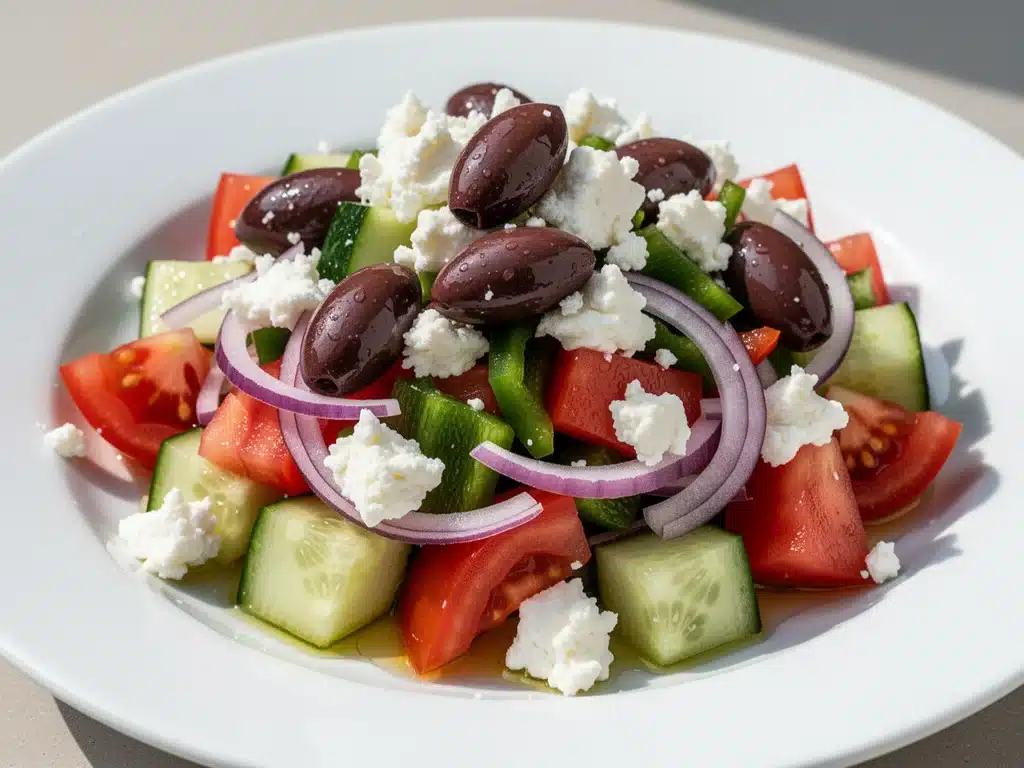
So I did what I always do when I’m desperate: I chopped everything into tiny, manageable pieces and tossed it together. I called it a “Chopped Greek Salad.” It wasn’t fancy. It didn’t have a fancy name. But as I ate it standing over the sink, I realized something important. This chopped Greek salad with feta and Kalamata olives wasn’t just a meal—it was a rescue mission. It was fresh, it was bright, and it took exactly 15 minutes from “I’m starving” to “I’m full.” Since then, this has become my go-to weeknight dinner when I have zero energy but refuse to eat cereal for the third night in a row.
Why You’ll Love This 15-Minute Dinner
There’s a specific kind of magic that happens when you stop trying to cook complicated meals and just embrace the simplicity of raw, high-quality ingredients. This chopped Greek salad has saved my weeknights more times than I can count. Here’s why it’s become a permanent fixture in our rotation:
- Zero Cooking Required — Seriously. If you can hold a knife, you can make this. No heating up the kitchen, no standing over a stove, no dirty pots to scrub. Just chopping and tossing. It’s perfect for those hot summer nights when you don’t want to turn on the oven.
- Actually Filling — Don’t let the “salad” label fool you. With the protein from the feta, the healthy fats from the olives and olive oil, and the fiber from the veggies, this is a complete meal. I’ve had this for dinner, and I wasn’t hungry an hour later. It’s substantial without being heavy.
- Pantry-Friendly Base — The ingredients for this chopped Greek salad with feta and Kalamata olives are staples I keep on hand year-round. You probably already have most of this in your fridge. It’s the ultimate “clean out the fridge” dinner that somehow tastes like a treat.
- Meal Prep Friendly — I’ve made this on Sunday and eaten it for lunch all week. The flavors actually get better after sitting in the dressing for an hour. It’s the perfect grab-and-go lunch that doesn’t taste like sad desk food.
- Quick Cleanup — One cutting board, one bowl, one knife. That’s it. If you’re cooking with a partner, this is the recipe that keeps the peace because nobody has to wash a single pot.
Real talk? This recipe is my answer to “what’s for dinner?” when I’m tired, broke, or just don’t feel like thinking. It’s reliable, it’s delicious, and it makes me feel like I’m eating well even on my worst weeknight.
Ingredients You’ll Need
Here’s the thing about this chopped Greek salad: it doesn’t need a long list of exotic ingredients. The magic is in the quality of the basics. I’m particular about a few things here, so let’s break down exactly what you need and why.
For the Salad Base
Romaine lettuce (1 large head, chopped / about 150g) — I use romaine because it holds up to chopping better than iceberg and doesn’t get soggy like butter lettuce. Chop it into bite-sized pieces. No one wants to eat a mouthful of long, stringy lettuce.
English cucumber (1 medium, chopped / about 200g) — English cucumbers are less seedy and have thinner skins, so I don’t bother peeling them. Chop them into small cubes so every bite has a nice crunch. If you only have slicing cucumbers, peel them first to avoid bitterness.
Cherry tomatoes (1 pint, halved / about 300g) — I use cherry tomatoes because they’re sweet and consistent. Grape tomatoes work too, but cherry tomatoes have a better flavor-to-size ratio. Halve them so they’re easy to eat.
Red onion (1 small, finely diced / about 50g) — This adds that sharp bite that balances the creamy feta. If you’re sensitive to raw onion, soak the diced pieces in cold water for 10 minutes before adding to the salad. It mellows the flavor significantly.
Green bell pepper (1 medium, finely diced / about 100g) — This is my secret weapon. It adds a fresh, slightly sweet crunch that ties everything together. You can skip it if you hate bell peppers, but I highly recommend it for texture.
For the Flavor Boosters
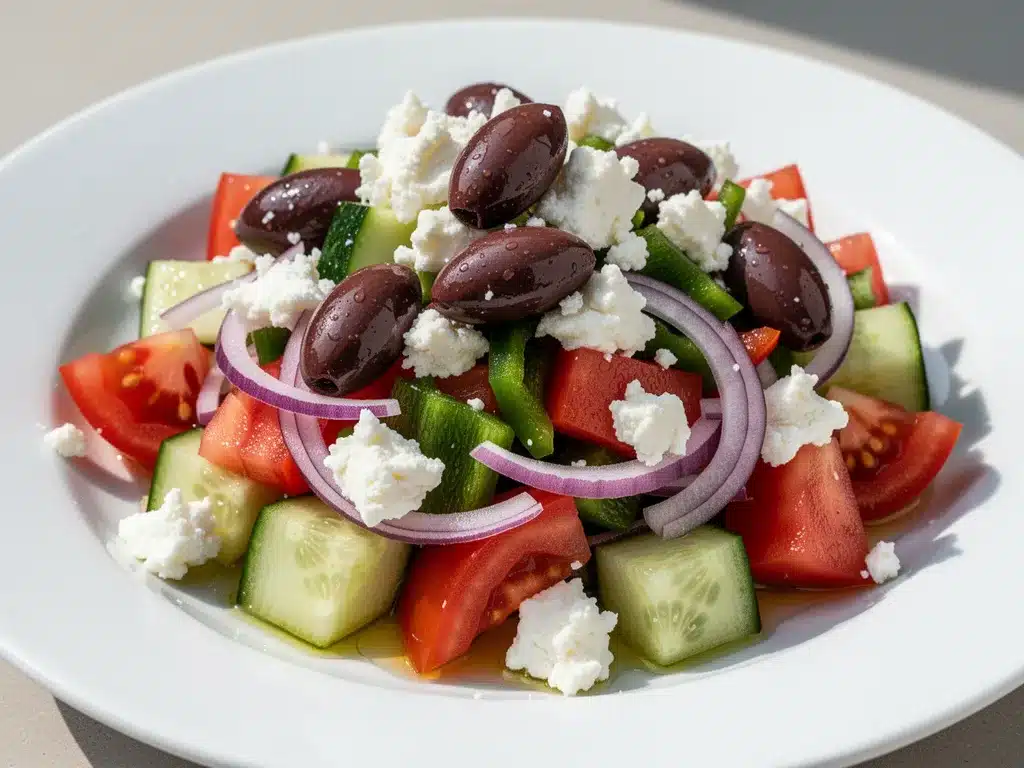
Feta cheese (6 ounces / 170g, crumbled) — Buy a block of feta and crumble it yourself. Pre-crumbled feta is often dusty and lacks that creamy tang. I use a good quality Greek feta, but any block feta works. Don’t skimp on the cheese—this is the star.
Kalamata olives (½ cup / 75g, pitted and halved) — These are non-negotiable for me. Their briny, wine-like flavor is what makes this salad taste like Greece. If you can’t find Kalamata, Castelvetrano olives work too, but they’re milder and sweeter. You want something salty.
Red wine vinegar (3 tablespoons / 45ml) — This gives the dressing its sharp acidity. Don’t use white wine vinegar; it’s too harsh. Red wine vinegar has a fruity depth that pairs perfectly with the olives.
Extra virgin olive oil (¼ cup / 60ml) — Use good quality here. This is a raw dressing, so the oil’s flavor shines through. I keep a bottle of mild extra virgin olive oil specifically for salads like this.
Dried oregano (1 teaspoon) — This is the classic Greek herb. Use it generously. If you have fresh oregano, use twice as much, but dried has a more concentrated flavor that stands up to the other ingredients.
Garlic (1 clove, minced / about 1 teaspoon) — Fresh garlic only. No jarred stuff here. Minced finely so you get a little bite in every spoonful.
Salt and black pepper — To taste. I usually add about ½ teaspoon of kosher salt and a generous crack of black pepper.
Equipment Needed
You don’t need fancy equipment for this. Here’s what I actually use:
Large cutting board — I prefer a big one because I’m chopping a lot of veggies. A smaller board means more cleanup.
Sharp chef’s knife — A dull knife makes chopping tedious and dangerous. I use my 8-inch chef’s knife for everything.
Large mixing bowl — Something big enough to toss the salad without spilling. I use a 5-quart bowl.
Microplane or fine grater — For the garlic. It minces it so finely that you don’t get big chunks.
Measuring spoons — For the dressing. I eyeball it sometimes, but measuring ensures consistency.
How to Make It: Step-by-Step
Alright, let’s make this! I’m walking you through exactly how I do it, including the little tricks I’ve picked up over the years.
Step 1: Prep Your Veggies (5-7 minutes)
Wash and dry all your produce. Moisture is the enemy of a good salad—it dilutes the dressing and makes everything soggy. Chop the romaine into bite-sized pieces. I like them small so you get a bit of everything in each forkful. Dice the cucumber and bell pepper into similar-sized pieces. Halve the cherry tomatoes. Finely dice the red onion. Set everything aside in separate piles or bowls.
Step 2: Make the Dressing (2 minutes)
In a small bowl, whisk together the extra virgin olive oil, red wine vinegar, minced garlic, dried oregano, salt, and black pepper. Whisk vigorously until the mixture emulsifies—it should look slightly creamy and well-combined. Taste it. It should be sharp and tangy. If it’s too acidic, add a tiny pinch of sugar or a bit more oil. This is the most important part, so don’t rush it.
Step 3: Combine the Salad (3 minutes)
In your large mixing bowl, add the chopped romaine, cucumber, bell pepper, and tomatoes. Drizzle about half the dressing over the veggies and toss gently to coat. Add the remaining dressing as needed. You don’t want it swimming in dressing, just lightly coated.
Step 4: Add the Stars (2 minutes)
Gently fold in the crumbled feta cheese and the Kalamata olives. Be gentle here—you don’t want to crush the feta into crumbs. Just let it distribute evenly throughout the salad.
Step 5: Serve Immediately
Transfer to serving bowls or plates. Add a final crack of black pepper and a sprinkle of extra oregano if you like. Eat right away while the veggies are crisp and the cheese is cool.
Total Time: About 15 minutes (10 minutes active, 5 minutes prep)
Expert Tips & Tricks
Here’s everything I’ve learned from making this dozens of times. These tips will save you from my mistakes.
Chop Everything Uniformly
I know it’s tempting to just chop things however, but uniform pieces ensure every bite has the same ratio of veggies, cheese, and olives. It also looks prettier, which matters when you’re taking photos for Pinterest (which, let’s be honest, is why we cook sometimes).
Don’t Skip the Salt
Salt enhances the flavor of the vegetables. Without it, the cucumber tastes like water and the tomatoes taste bland. Salt your veggies lightly before adding the dressing, or make sure your dressing is well-seasoned.
Use Good Feta
I’ve tried cheap feta, and it’s just salty and crumbly without any creaminess. Spend the extra dollar on a good block of feta from the cheese counter. It makes a huge difference in the overall flavor.
Make It Ahead Smartly
If you’re meal prepping, keep the dressing separate until you’re ready to eat. The salad will get soggy if you dress it too far in advance. I prep the veggies on Sunday and store them in airtight containers. When I’m ready to eat, I toss them with the dressing and add the feta and olives.
Add Some Crunch
For extra texture, I sometimes add toasted pine nuts or walnuts. They add a nice nutty flavor and make the salad feel more substantial. It’s optional, but it’s delicious.
Variations & Substitutions
Once you’ve nailed the basic version, here’s how you can mix it up. I’ve tried all of these.
Protein-Packed Version
Add grilled chicken breast, shrimp, or chickpeas. I often add canned chickpeas for a vegetarian protein boost. Rinse them well and toss them in with the veggies.
Mediterranean Twist
Add artichoke hearts (canned, drained) and sun-dried tomatoes. It adds a rich, savory depth that’s incredible with the feta.
Lighter Version
Reduce the olive oil to 2 tablespoons and use lemon juice instead of half the vinegar. It’s tangier and lighter, perfect for hot summer days.
Gluten-Free
This recipe is naturally gluten-free, but check your feta and olives to ensure they’re processed in a gluten-free facility. Most are, but it’s worth checking if you’re celiac.
Vegan Version
Replace feta with vegan feta (there are some good brands now) or use marinated tofu cubes. The rest of the recipe stays the same.
Serving & Storage
How to Serve: I usually serve this straight from the bowl at the dinner table. It looks rustic and fresh. Pair it with crusty bread or pita for dipping in the leftover dressing.
Side Dishes: Grilled fish, chicken skewers, or a simple hummus plate. It’s versatile enough to stand alone or complement other dishes.
Storage: Store leftovers in an airtight container in the fridge for up to 2 days. The salad will soften slightly, but it’s still delicious. Do not freeze this salad—the texture of the veggies will suffer.
Reheating: Don’t reheat this salad. It’s meant to be eaten cold or room temperature. If you’re meal prepping, eat it within 2 days for best quality.
Nutrition Information
I’m not a nutritionist, but here’s the breakdown if you’re tracking. This is per serving (based on 4 servings).
| Nutrient | Amount |
|---|---|
| Calories | 280 |
| Protein | 12g |
| Carbs | 15g |
| Fiber | 4g |
| Sugar | 8g |
| Fat | 20g |
| Saturated Fat | 6g |
| Cholesterol | 30mg |
| Sodium | 580mg |
What’s good? High in healthy fats from the olive oil and olives, good protein from the feta, and lots of vitamins from the veggies. What to know? It’s higher in sodium due to the feta and olives, so adjust your salt accordingly if you’re watching sodium intake.
Final Thoughts
So that’s my go-to chopped Greek salad! I’ve probably talked your ear off at this point, but when you make a recipe this often, you have a lot to say about it. This has saved weeknight dinners more times than I can count. It’s my answer to “what’s for dinner?” when I’m tired, don’t want takeout, and still want something that tastes really good. My kids are happy, my husband’s happy, and I’m happy because I’m not stressed about cooking.
Make it yours! Try different add-ins, swap in your favorite vegetables, adjust the garlic (though more is always better in my opinion). The best recipes are the ones you adapt to your family’s tastes.
If you make this, drop a comment and let me know what you think! I love hearing how recipes turn out in your kitchen. And if something doesn’t work, tell me that too—I’m here to help troubleshoot.
Happy cooking! And I hope your kitchen smells half as good as mine does right now.
Frequently Asked Questions
Can I use iceberg lettuce instead of romaine?
You can, but I don’t recommend it. Iceberg is watery and doesn’t hold up to chopping as well. It also lacks the sturdy texture that romaine provides. If you must use iceberg, chop it finely and add it right before serving to avoid sogginess. But romaine is the way to go for this salad.
Why did my salad turn out watery?
Usually, this happens if you didn’t dry the veggies thoroughly after washing them, or if you dressed the salad too far in advance. Make sure to spin-dry your lettuce and pat your veggies dry. Also, don’t add the dressing until you’re ready to eat. If you’re meal prepping, store the dressing separately.
Can I make this ahead for a dinner party?
Yes! Prep all the veggies and store them in airtight containers in the fridge for up to 2 days. Make the dressing and store it separately. When you’re ready to serve, toss everything together. It’s actually better if you let it sit for an hour before serving, as the flavors meld together.
Can I use goat cheese instead of feta?
You can, but the flavor will be different. Goat cheese is tangier and softer than feta. It won’t crumble as nicely, so you’ll need to break it up with a fork. I prefer feta for its salty, briny flavor, but goat cheese works if that’s what you have.
How long does this salad last in the fridge?
Up to 2 days. After that, the veggies start to get soggy and the flavors diminish. It’s best eaten fresh, but it’s still good the next day. Do not freeze it.
Can I double this recipe?
Absolutely! Double all the ingredients and use a larger bowl. The cooking times stay the same. I do this when I’m meal-prepping for the week. Just make sure your bowl is big enough to toss everything without spilling.
Pin This Recipe!
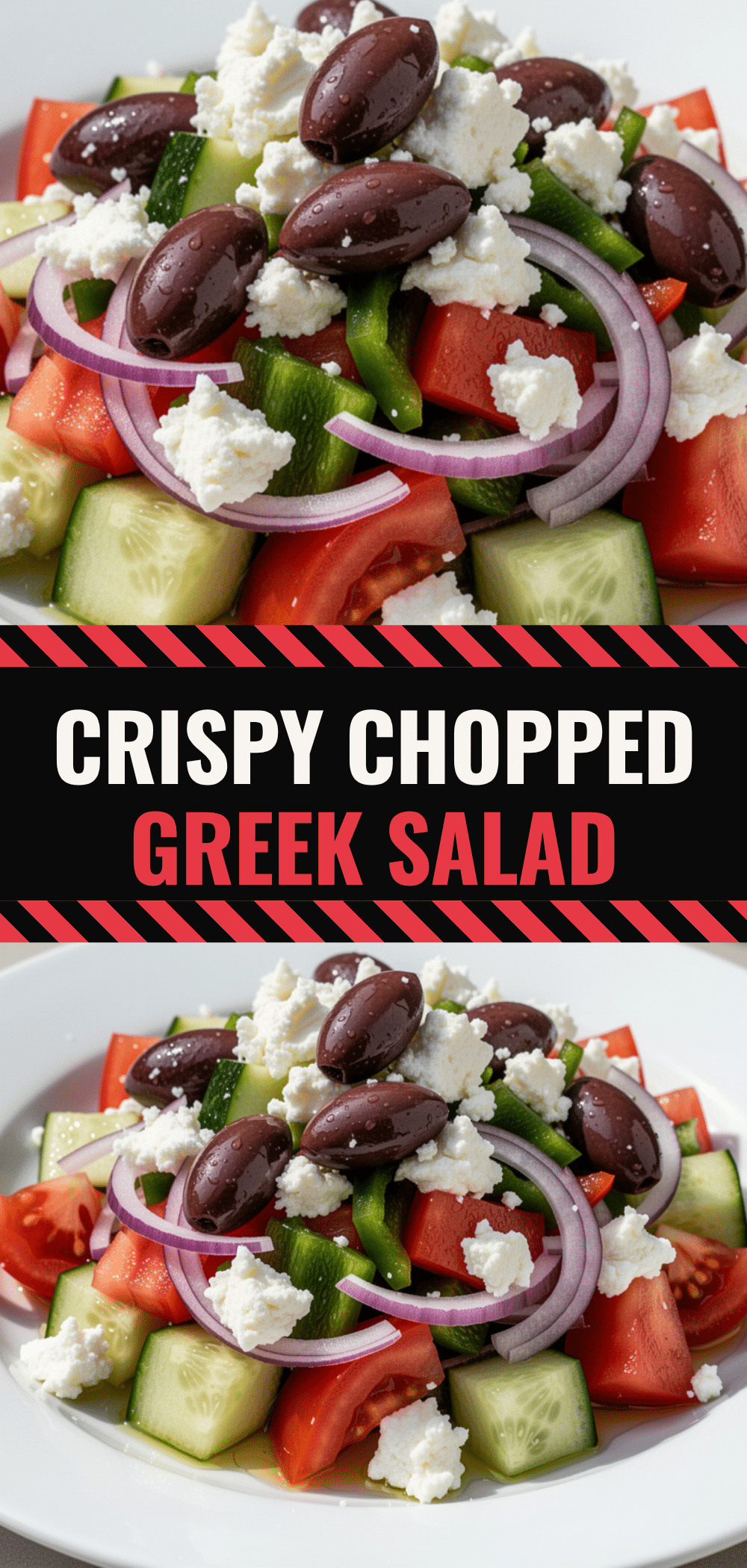
Chopped Greek Salad: Perfect 15-Min Weeknight Dinner
- Total Time: 15 minutes
- Yield: 4 servings 1x
Description
A quick, no-cook chopped Greek salad with feta and Kalamata olives that takes just 15 minutes to prepare. It’s a filling, pantry-friendly weeknight dinner that requires zero cooking and minimal cleanup.
Ingredients
- 1 large head romaine lettuce, chopped (about 150g)
- 1 medium English cucumber, chopped (about 200g)
- 1 pint cherry tomatoes, halved (about 300g)
- 1 small red onion, finely diced (about 50g)
- 1 medium green bell pepper, finely diced (about 100g)
- 6 ounces feta cheese, crumbled (170g)
- ½ cup Kalamata olives, pitted and halved (75g)
- 3 tablespoons red wine vinegar (45ml)
- ¼ cup extra virgin olive oil (60ml)
- 1 teaspoon dried oregano
- 1 clove garlic, minced
- ½ teaspoon kosher salt
- Black pepper, to taste
Instructions
- Wash and thoroughly dry all produce to prevent sogginess.
- Chop the romaine lettuce into bite-sized pieces.
- Dice the cucumber and green bell pepper into small, uniform cubes.
- Halve the cherry tomatoes.
- Finely dice the red onion (soak in cold water for 10 minutes if sensitive to raw onion).
- In a small bowl, whisk together the extra virgin olive oil, red wine vinegar, minced garlic, dried oregano, salt, and black pepper until emulsified.
- In a large mixing bowl, combine the chopped romaine, cucumber, bell pepper, and tomatoes.
- Drizzle about half the dressing over the vegetables and toss gently to coat. Add remaining dressing as needed.
- Gently fold in the crumbled feta cheese and Kalamata olives.
- Serve immediately, garnished with extra black pepper and oregano if desired.
Notes
Ensure vegetables are completely dry before chopping to maintain crispness. For meal prep, store dressing separately and add just before eating to prevent sogginess. This salad is best eaten fresh but can be stored in the fridge for up to 2 days. Do not freeze.
- Prep Time: 15 minutes
- Cook Time: 0 minutes
- Category: Main Course
- Cuisine: Greek
Nutrition
- Serving Size: 1 serving
- Calories: 280
- Sugar: 8
- Sodium: 580
- Fat: 20
- Saturated Fat: 6
- Carbohydrates: 15
- Fiber: 4
- Protein: 12
Keywords: Greek salad, chopped salad, weeknight dinner, 15 minute meals, no cook dinner, healthy salad, feta cheese, Kalamata olives, meal prep