It was 6:45 PM on a Tuesday, and I was staring into the abyss of my refrigerator. You know that look. The one where the light flickers just enough to make you question your life choices. Inside, there was a lonely salmon fillet that had been promised to my husband three days ago, a basket of spinach that was starting to look a little sad, and a jar of sun-dried tomatoes that had been open for… well, let’s not dwell on that. My usual go-to for this exact scenario is my One Pot Creamy Tuscan Chicken Pasta, which is so reliable I could probably make it with my eyes closed. But tonight, I wanted something that felt a bit more special, a bit more “I tried,” even though I had exactly zero energy to try.
So I threw the salmon in. I sautéed the spinach. I dumped in the cream and the garlic. I expected a mediocre dinner at best, maybe something my husband would politely eat while checking his email. What I got was, honestly, restaurant-quality. The salmon flaked apart perfectly, the sauce was rich and herby, and the whole thing came together in under 30 minutes. That night, I realized I had accidentally invented my new favorite weeknight rescue. This creamy tuscan salmon pasta isn’t just about convenience; it’s about getting that fancy, sun-drenched Italian flavor without the fancy effort or the long cleanup.
I’ve made this dish at least a dozen times since that Tuesday. I’ve tweaked the spices, tried different types of pasta, and even convinced my picky eater of a nephew to ask for seconds. It’s become the answer to “what’s for dinner” when I’m exhausted but still want to feed my family something that tastes like I actually cared (even though I was just trying to avoid takeout). If you’re looking for a meal that’s visually stunning, deeply flavorful, and ridiculously easy, this is it. Let’s get into why this creamy tuscan salmon pasta has stolen the show from my other usual suspects.
Why You’ll Love This Recipe
There are plenty of salmon recipes out there, and plenty of pasta recipes, too. But this creamy tuscan salmon pasta hits a sweet spot that few other dishes manage. It’s the intersection of “healthy-ish” and “comfort food heaven.” Here’s why I keep coming back to it:
It’s a Complete One-Pan Wonder (Almost) — Okay, technically you boil pasta in one pot and cook the salmon in a skillet, but that’s still less dishes than most meals. The sauce cooks right in the same pan you sear the fish in, meaning one big skillet to wash at the end. I love a low-cleanup meal because, let’s be real, the cooking is the fun part. The cleaning is the punishment.
Restaurant Quality, Home Cook Speed — You know how some restaurants serve salmon with a creamy sun-dried tomato sauce, and it costs $28? This tastes just like that, but it takes 25 minutes to make and costs about $15 for leftovers. My husband always jokes that I’m “cooking at the restaurant level” when I make this, which is my highest compliment.
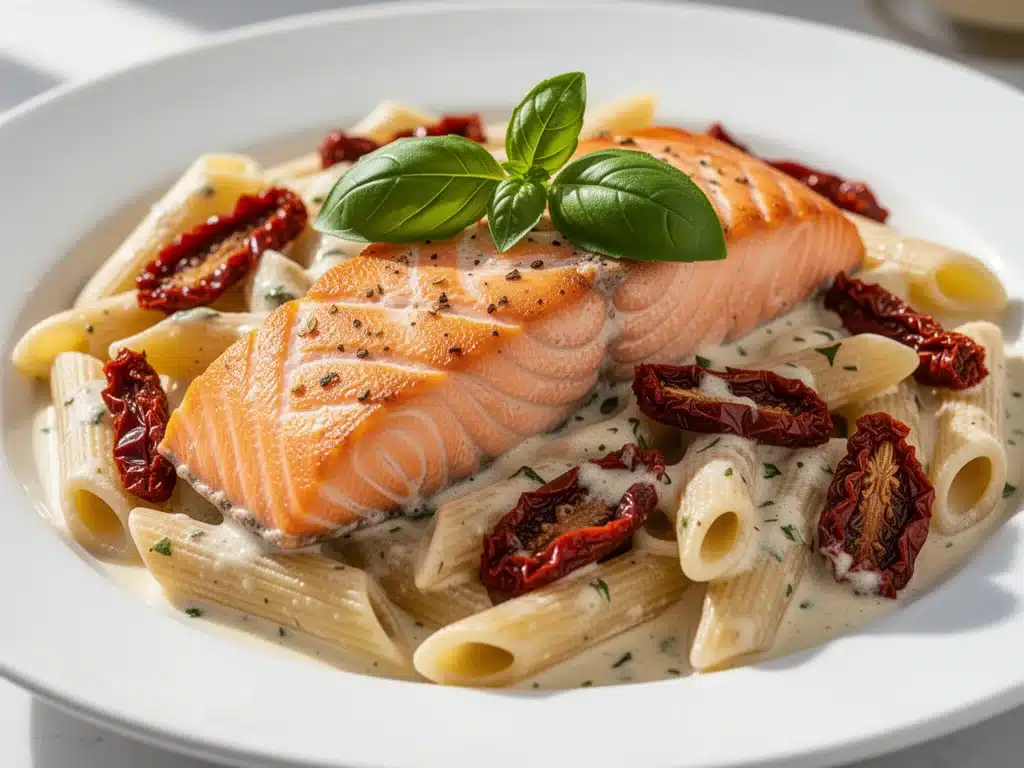
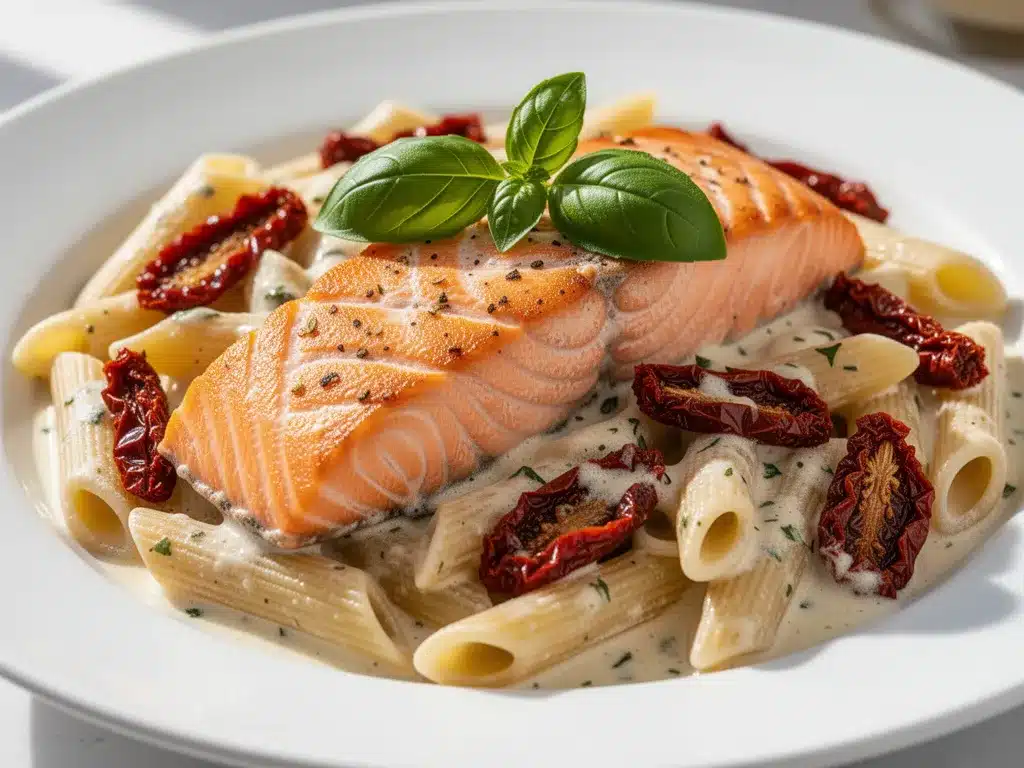
It’s Visually Stunning — I’m a huge believer in eating with your eyes, especially for Pinterest. The contrast of the pink salmon, the dark green spinach, the red sun-dried tomatoes, and the creamy white sauce is gorgeous. It looks like you spent hours plating it, when really you just dumped it all together. This is perfect for when you want to impress guests or just want to feel fancy on a random Wednesday.
Healthy Fats, Happy Brain — Salmon is packed with omega-3s, and pairing it with a cream sauce made from heavy cream or half-and-half gives you that satisfying richness without feeling heavy. It’s filling, but not in a “I need a nap immediately after eating” way. It’s energizing comfort food.
Super Flexible — Ran out of salmon? Use chicken or shrimp. Hate sun-dried tomatoes? Use roasted red peppers. This recipe is a canvas. I’ve made it with pesto, with fresh basil, with just garlic and lemon. But the classic creamy tuscan salmon pasta version is the gold standard for me.
Ingredients You’ll Need
Here’s the best part: most of these ingredients are pantry staples or things you probably already have in the fridge. I’m particular about a few things here, so pay attention to the notes, especially on the salmon and the cheese.
For the Salmon:
Salmon fillets (1.5 lbs / 680g) — Look for fresh, wild-caught if you can afford it, but farmed is fine too. The key is that they are roughly the same thickness so they cook evenly. Skin-on or skin-off is your choice; I usually buy skinless for convenience, but skin-on gives a nicer crunch. Pat them dry! Wet salmon steams instead of sears. Trust me.
Salt and black pepper — Generous seasoning is key. Don’t be shy.
For the Sauce:
Butter (2 tablespoons) — Unsalted is best so you control the saltiness. I use real butter, not margarine. It makes a huge difference in flavor.
Garlic (4-5 cloves, minced) — Fresh garlic only. Jarred garlic has a sulfuric taste that doesn’t work well in a delicate cream sauce. If you’re lazy, buy pre-minced in a jar, but fresh is worth the 2 minutes.
Sun-dried tomatoes (½ cup, chopped) — These are the non-negotiable “Tuscan” element. Buy them packed in oil, not dried. Drain them, but save a tablespoon of that oil! That oil is liquid gold for flavor. If you can’t find sun-dried tomatoes, roasted red peppers are a decent substitute, but the flavor profile changes slightly.
Heavy cream (1 cup / 240ml) — This gives the sauce its richness. You can use half-and-half for a lighter version, but it won’t be as thick or luxurious. If you want dairy-free, coconut cream works, but it adds a coconut flavor that might clash with the Italian herbs.
Chicken broth (½ cup / 120ml) — Low-sodium is best. This adds depth and prevents the sauce from being too heavy. Vegetable broth works for a vegetarian version.
Italian seasoning (1 teaspoon) — Or a mix of dried basil, oregano, and thyme. Fresh herbs are better, but dried is more convenient. If using fresh, add them at the end.
Parmesan cheese (½ cup / 50g, freshly grated) — Buy the block and grate it yourself. Pre-grated cheese has anti-caking agents that prevent it from melting smoothly. I’ve learned this the hard way with grainy sauce.
For the Pasta:
Penne or Fusilli (12 oz / 340g) — I prefer penne because the sauce gets inside the tubes. Fusilli is also great because the spirals hold the creamy sauce well. Avoid spaghetti; the sauce slides right off. Gluten-free pasta works too, but cook it al dente—it gets mushy faster.
Spinach (4 cups / 120g fresh) — Fresh baby spinach wilts down to nothing. Don’t be fooled by the volume. If you only have frozen spinach, thaw it and squeeze out ALL the water. Excess water will make your sauce runny.
Lemon (1, zested and juiced) — The acid cuts through the richness of the cream. Don’t skip the zest! It adds a bright aroma.
Equipment Needed
You don’t need fancy gadgets for this. Here’s what I actually use:
Large Skillet or Dutch Oven — I use a 12-inch stainless steel skillet. It needs to be big enough to hold the salmon fillets in a single layer without crowding. If your pan is too small, the salmon will steam. Cast iron works too, but you need to be careful not to burn the garlic.
Pasta Pot — A large pot for boiling the pasta. Any size works as long as it holds 12oz of pasta comfortably.
Wooden Spoon — For stirring the sauce. Metal spoons can scratch non-stick pans, so stick to wood or silicone.
Knife and Cutting Board — For chopping the sun-dried tomatoes and mincing garlic.
Grater — For the Parmesan. A microplane is nice for the lemon zest.
Measuring Cups and Spoons — Standard stuff.
How to Make It: Step-by-Step
Alright, let’s make this! I’m walking you through exactly how I do it, including the little tricks I’ve picked up over the years.
Step 1: Prep Your Ingredients (5 minutes)
Before you turn on the stove, get everything ready. Chop the sun-dried tomatoes, mince the garlic, grate the cheese, and measure out the cream. I know it seems fussy, but it makes the actual cooking way less stressful. Once the pasta is boiling and the salmon is searing, things move fast. Season the salmon fillets generously with salt and pepper on both sides.
Step 2: Cook the Pasta (10-12 minutes)
Bring a large pot of salted water to a boil. The water should taste like the ocean. Add the pasta and cook according to package directions until al dente. IMPORTANT: Before draining, scoop out 1 cup of pasta water and set it aside. This starchy water is magic for the sauce. Drain the pasta and set aside. Do not rinse it!
Step 3: Sear the Salmon (5-6 minutes)
While the pasta cooks, heat 1 tablespoon of olive oil in your large skillet over medium-high heat. Once the oil is shimmering, add the salmon fillets. Sear for 3-4 minutes on one side without moving them. This creates a beautiful crust. Flip and cook for another 2-3 minutes until the salmon is cooked through but still moist. Remove the salmon from the pan and set it on a plate. Cover loosely with foil to keep it warm. Don’t overcook it!
Step 4: Build the Sauce (5 minutes)
Reduce the heat to medium. In the same skillet (don’t clean it!), add the butter. Once melted, add the minced garlic and cook for 30 seconds until fragrant. Add the chopped sun-dried tomatoes and cook for 1 minute. Pour in the heavy cream and chicken broth. Stir well, scraping up any browned bits from the bottom of the pan—those are flavor bombs. Let the sauce simmer for 2-3 minutes until it thickens slightly.
Step 5: Add the Cheese and Spinach (2 minutes)
Stir in the grated Parmesan cheese until melted. Add the fresh spinach and stir until it wilts, about 1 minute. Taste the sauce. Does it need more salt? More pepper? A squeeze of lemon juice? Adjust as needed. The sauce should be creamy and coat the back of a spoon.
Step 6: Combine and Serve (2 minutes)
Return the cooked salmon to the pan, nestling it into the sauce. Or, flake the salmon into large chunks and stir it in. Add the drained pasta to the skillet and toss everything together until the pasta is well coated. If the sauce is too thick, add a splash of that reserved pasta water. If it’s too thin, let it simmer for another minute. Serve immediately, topped with extra Parmesan, fresh basil, and a drizzle of olive oil.
Expert Tips & Tricks
Here’s everything I’ve learned from making this dozens of times. These tips will save you from my mistakes.
Don’t Overcook the Salmon — Salmon continues to cook even after you remove it from the pan. Take it off when it’s still slightly translucent in the center. It will finish cooking in the residual heat. Overcooked salmon is dry and sad.
Save the Pasta Water — I can’t stress this enough. That starchy water is what makes the sauce cling to the pasta perfectly. I forgot it once and the sauce was just okay instead of amazing. Now I set out a measuring cup before I even start cooking so I don’t forget.
Low Heat for Cheese — Always remove the pan from the heat before adding the Parmesan. High heat makes cheese grainy and separated. I learned this the hard way with a grainy, broken sauce that looked awful.
Use Fresh Lemon — Bottled lemon juice tastes artificial. Fresh lemon juice and zest brighten up the heavy cream sauce. It’s the secret weapon.
Room Temperature Cream — Cold cream can make the sauce separate. I take my cream out of the fridge 15 minutes before cooking. If I forget, I microwave it for 15 seconds.
Variations & Substitutions
Once you’ve nailed the basic version, here’s how you can mix it up. I’ve tried all of these.
Shrimp Version — Swap salmon for large shrimp. Cook them for 2-3 minutes per side. They cook faster than fish, so keep an eye on them.
Chicken Version — Use chicken breasts or thighs. Sear them like the salmon, remove, and make the sauce. This is essentially my One Pot Creamy Tuscan Chicken Pasta but with a different protein. Both are delicious.
Veggie-Loaded — Add sliced mushrooms or zucchini when you sauté the garlic. They absorb the creamy sauce beautifully.
Lighter Version — Use half-and-half instead of heavy cream, and reduce Parmesan to ¼ cup. It’s thinner but still good. I make this when I’m trying to be “healthy.”
Gluten-Free — Use gluten-free pasta. Everything else is naturally gluten-free. I’ve used Barilla gluten-free and it works great.
Dairy-Free — Replace heavy cream with full-fat coconut cream and Parmesan with nutritional yeast. It’s different but still tasty. My lactose-intolerant friend requests this version.
Serving & Storage
How to Serve: I usually serve this straight from the skillet at the dinner table—it looks rustic and stays warm. But here are other ways I’ve enjoyed it:
- Garlic Bread: Obviously. You can’t have creamy pasta without garlic bread.
- Simple Green Salad: A light arugula salad with lemon vinaigrette cuts through the richness.
- Roasted Broccoli: Adds a nice crunch and earthiness.
Storage Instructions: Store leftovers in an airtight container in the fridge for up to 3 days. The sauce will thicken in the fridge—totally normal.
Reheating: Best method: Add to a skillet with a splash of milk or cream over low heat. Stir until heated through and creamy again. Microwave method: Heat in 30-second intervals, stirring between. Add a splash of milk if it’s too thick. Never works: Trying to reheat in the pot you cooked it in. It always burns on the bottom. Ask me how I know.
Freezing: Honestly, this doesn’t freeze well because of the dairy. The sauce separates when thawed. Make it fresh or store in the fridge for up to 3 days.
Nutrition Information
I’m not a nutritionist, but here’s the breakdown if you’re tracking.
Per Serving (based on 4 servings):
- Calories: 650
- Protein: 35g
- Carbs: 55g
- Fiber: 3g
- Sugar: 4g
- Fat: 32g
- Saturated Fat: 18g
- Cholesterol: 120mg
- Sodium: 450mg
- Calcium: 300mg
What’s Good: High protein from the salmon, calcium from the cheese. Omega-3s for brain health.
What to Know: Higher in calories from cream and cheese. Contains dairy and gluten. Moderate sodium.
My Take: Look, this is comfort food with cream and cheese. It’s not a diet recipe. But it’s way better than takeout, costs less, and I know exactly what’s in it. When I want to make it lighter, I use the half-and-half version and load up on vegetables. But usually? I just eat a reasonable portion and enjoy it.
Final Thoughts
So that’s my go-to creamy tuscan salmon pasta! I’ve probably talked your ear off at this point, but when you make a recipe this often, you have a lot to say about it. This has saved weeknight dinners more times than I can count. It’s my answer to “what’s for dinner” when I’m tired, don’t want takeout, and still want something that tastes really good. My kids are happy, my husband’s happy, and I’m happy because I’m not stressed about cooking.
Make it yours! Try different add-ins, swap in your favorite vegetables, adjust the garlic (though more is always better in my opinion). The best recipes are the ones you adapt to your family’s tastes. If you make this, drop a comment and let me know what you think! I love hearing how recipes turn out in your kitchen. And if something doesn’t work, tell me that too—I’m here to help troubleshoot. Happy cooking! And I hope your kitchen smells half as good as mine does right now.
Frequently Asked Questions
Q: Can I use milk instead of heavy cream?
A: You can, but the sauce will be much thinner and less rich. If you want to try it, use whole milk (not skim) and add 2 tablespoons of flour to thicken it. Whisk the flour into the milk before adding to the pan. I’ve done this when I ran out of cream—it works okay, just not as good as the real thing. Half-and-half is a better middle ground.
Q: My sauce came out watery—what happened?
A: Usually means you didn’t let it simmer long enough to thicken, or you added too much pasta water at the end. Let the cream mixture simmer for a full 3-4 minutes before adding cheese. If it’s already watery, turn up the heat and let it reduce for another few minutes. The cheese will also thicken it up.
Q: Can I make this ahead for a dinner party?
A: Sort of. Make the sauce up to 2 days ahead and store in the fridge. Cook the pasta and salmon fresh right before serving (takes 10 minutes). Reheat the sauce gently and toss with hot pasta. It won’t be quite as good as fresh, but it’s close and saves you stress during the party. I do this all the time.
Q: Why did my sauce get grainy/lumpy?
A: The heat was too high when you added the cheese, which made it seize up. Parmesan needs gentle heat. Always remove the pan from the burner before adding cheese, then stir it in off heat. If it’s already grainy, try whisking in a splash of warm cream—sometimes you can save it.
Q: Can I use jarred garlic?
A: You can, but fresh tastes so much better in this recipe. Jarred garlic has a weird metallic taste that really shows up in cream sauces. If you must use it, use half the amount because it’s stronger. But honestly, mincing 6 cloves takes like 2 minutes. Buy pre-peeled garlic cloves if you want to save time.
Q: How do I reheat leftovers without it getting dry?
A: Add a splash of milk or cream to a skillet, add your leftover pasta, and heat gently over low heat, stirring frequently. The extra liquid brings back the creamy texture. Microwave sort of works but tends to dry it out. If you do microwave, definitely add a splash of milk first and heat in short bursts, stirring between.
Q: Can I double this recipe?
A: Absolutely! Double everything and use your biggest pot. The cooking times stay the same. I do this when I’m meal-prepping or feeding a crowd. Just make sure your skillet is big enough for the sauce—you might need to use two pans or a very large skillet.
Pin This Recipe!
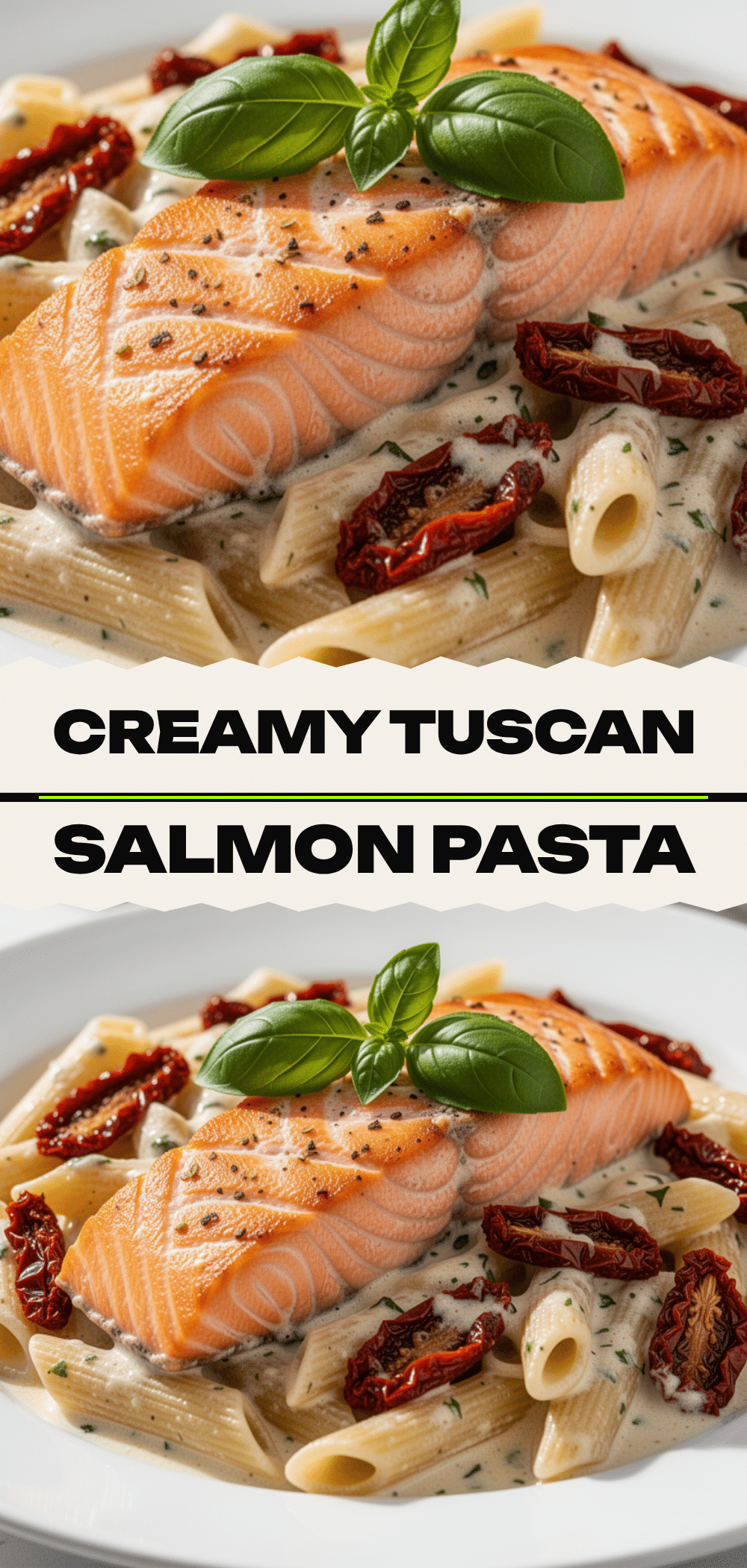
Creamy Tuscan Salmon Pasta
- Total Time: 30 minutes
- Yield: 4 servings 1x
Description
A rich and creamy weeknight dinner featuring seared salmon fillets tossed in a sun-dried tomato and spinach sauce with pasta. It offers restaurant-quality flavor with minimal cleanup.
Ingredients
- 1.5 lbs salmon fillets
- Salt and black pepper
- 2 tablespoons butter (unsalted)
- 4–5 cloves garlic (minced)
- ½ cup sun-dried tomatoes (chopped, packed in oil)
- 1 cup heavy cream
- ½ cup chicken broth (low-sodium)
- 1 teaspoon Italian seasoning
- ½ cup Parmesan cheese (freshly grated)
- 12 oz penne or fusilli pasta
- 4 cups fresh baby spinach
- 1 lemon (zested and juiced)
- 1 tablespoon olive oil (for searing)
Instructions
- Season salmon fillets generously with salt and pepper on both sides.
- Bring a large pot of salted water to a boil. Cook pasta according to package directions until al dente. Reserve 1 cup of pasta water before draining.
- Heat 1 tablespoon olive oil in a large skillet over medium-high heat. Sear salmon for 3-4 minutes per side until cooked through but moist. Remove salmon and set aside.
- Reduce heat to medium. In the same skillet, melt butter. Add garlic and cook for 30 seconds until fragrant.
- Add sun-dried tomatoes and cook for 1 minute. Pour in heavy cream and chicken broth, scraping up browned bits from the bottom.
- Simmer sauce for 2-3 minutes until it thickens slightly.
- Stir in Parmesan cheese until melted. Add spinach and stir until wilted (about 1 minute). Adjust seasoning with salt, pepper, and lemon juice.
- Return salmon to the pan or flake into chunks. Add drained pasta to the skillet and toss to coat. Add reserved pasta water if needed to adjust consistency.
- Serve immediately topped with extra Parmesan, fresh basil, and a drizzle of olive oil.
Notes
Do not overcook the salmon; it continues to cook after removal from heat. Save pasta water to help the sauce cling to the pasta. Add cheese off heat to prevent graininess. Use fresh lemon juice and zest for best flavor. This dish does not freeze well due to the dairy sauce.
- Prep Time: 5 minutes
- Cook Time: 25 minutes
- Category: Main Course
- Cuisine: Italian
Nutrition
- Serving Size: 1 plate with salmon
- Calories: 650
- Sugar: 4
- Sodium: 450
- Fat: 32
- Saturated Fat: 18
- Carbohydrates: 55
- Fiber: 3
- Protein: 35
Keywords: salmon pasta, tuscan salmon, creamy pasta, weeknight dinner, one pan meal, easy seafood recipe, sun-dried tomato sauce